Leave a Message

Thank you for your message. We will be in touch with you shortly.

The Local Lowdown: September 2023

Michelle Kim  |  September 1, 2023

The Local Lowdown: September 2023

The Local Lowdown

Quick Take:
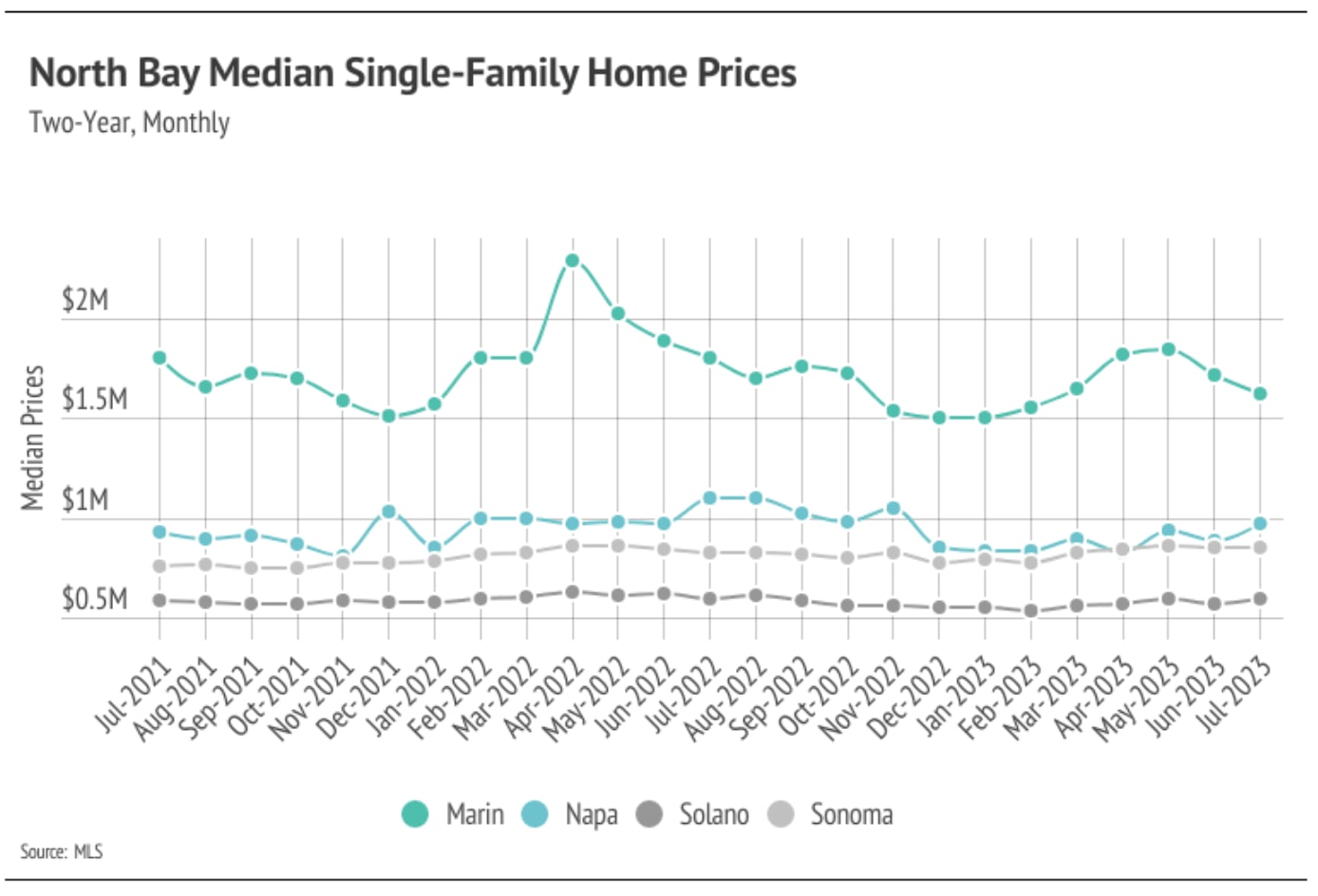
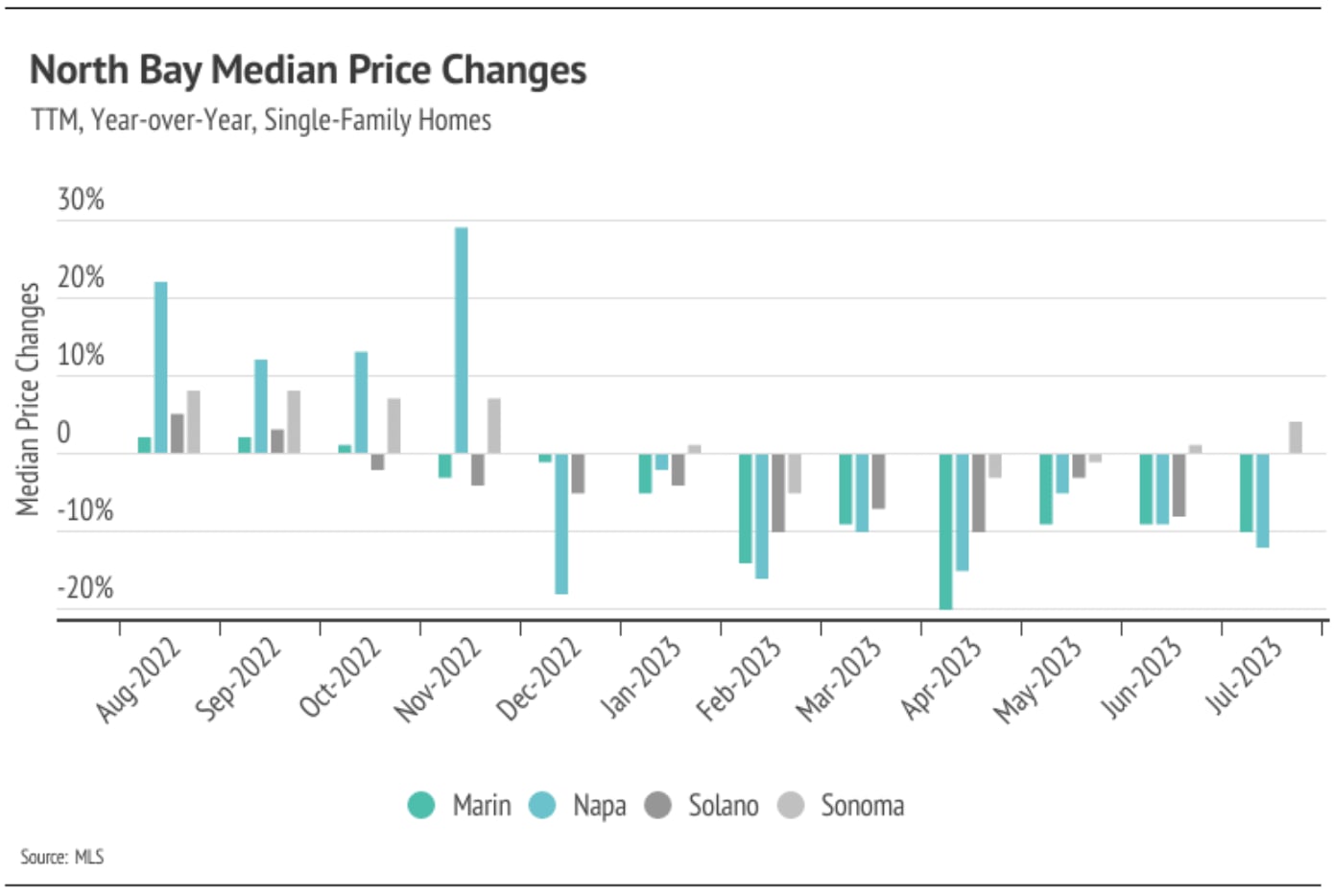
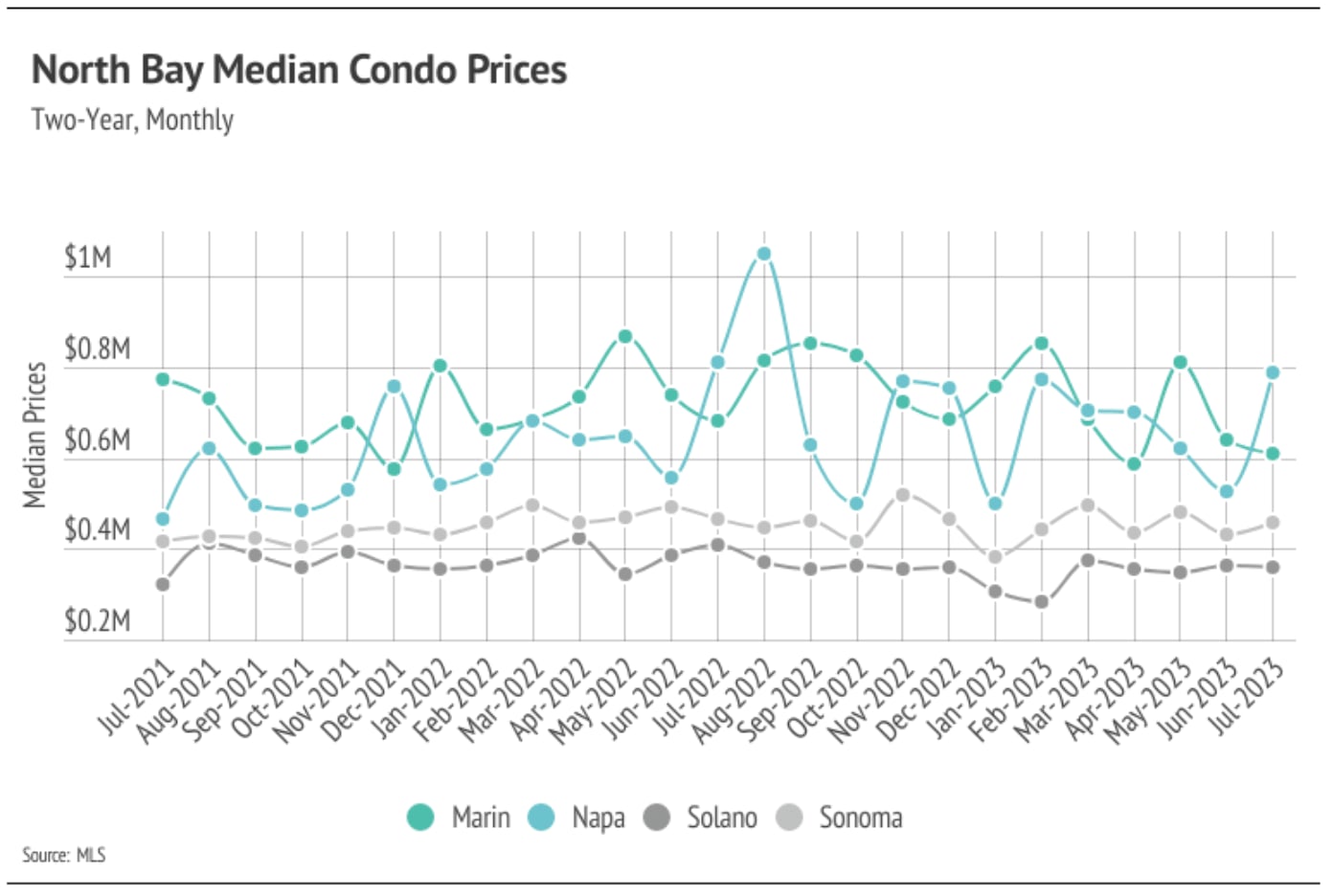
  • Year to date, single-family home prices were up across the North Bay, while condo prices fell slightly. We expect seasonal trends to hold through the rest of the year and for home prices to remain fairly stable.
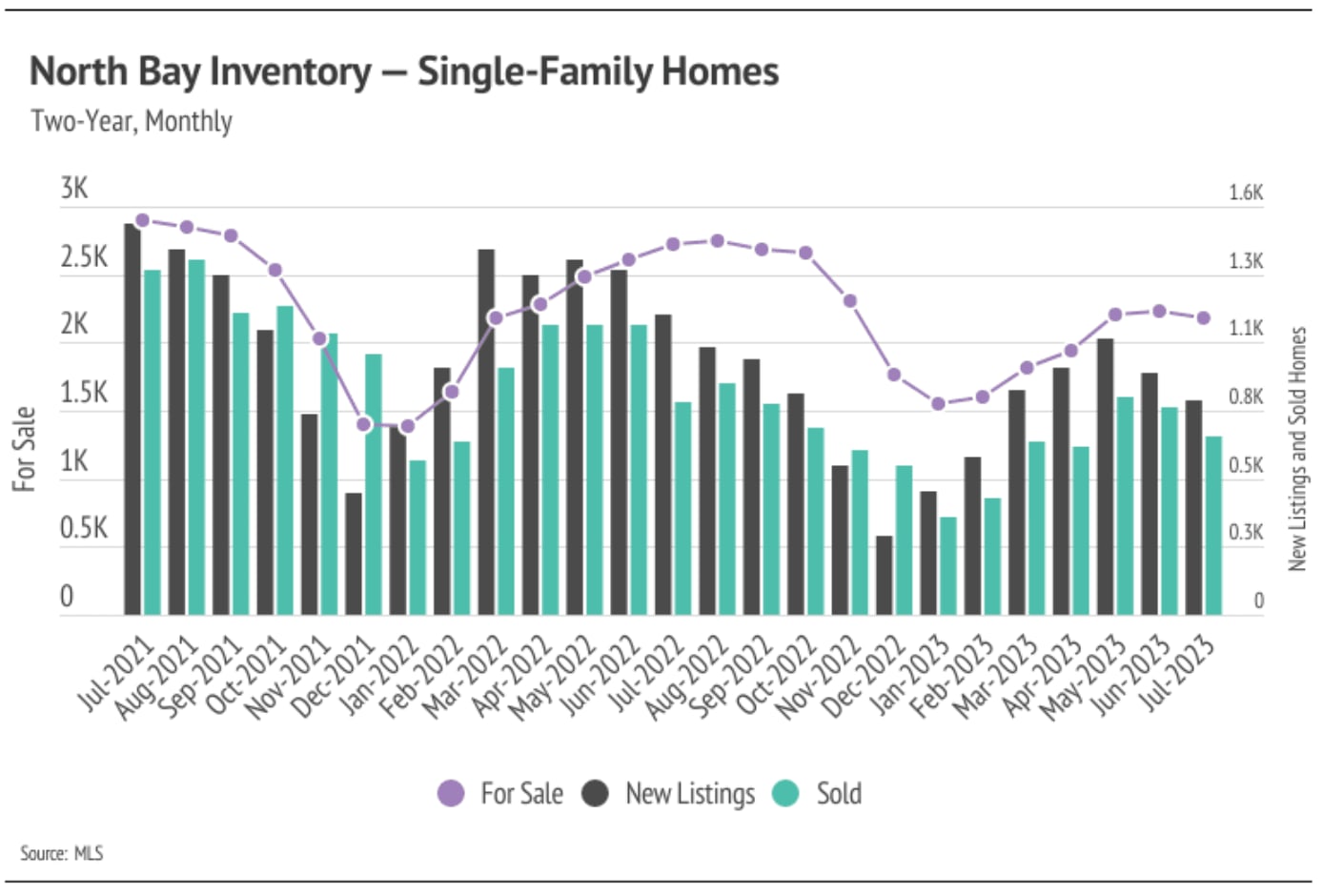
  • Sales, new listings, and inventory all fell from June to July, likely indicating the start of the typical seasonal decline across supply and demand metrics. Inventory remains depressed but has still grown significantly in 2023, which has helped alleviate some excess demand.
  • Months of Supply Inventory has declined significantly in 2023, homes are selling more quickly, and sellers are receiving a greater percentage of asking price, all of which highlight an increasingly competitive environment for buyers.
Note: You can find the charts/graphs for the Local Lowdown at the end of this section.
 

Single-family home price growth slows as fewer new listings come to market

In the North Bay, the housing market is always experiencing high demand, especially in the spring and early summer months. Increasing demand and low, but rising inventory helped drive the rapid home price appreciation that the North Bay experienced in the first half of the year. Typically, demand begins to decline in July and August, so the consistently low supply may become less of an issue. However, less of an issue doesn’t mean a non-issue. Quality new listings will certainly be sold quickly, while less desirable homes will sit on the market. This isn’t unusual, but it’s more apparent due to current mortgage rates. Potential homebuyers aren’t nearly as willing to pay a premium for a fixer upper as they were in 2020 and 2021.
 
In July, the median single-family home prices were up year to date across North Bay counties. As sales and new listings slow in the second half of the year, home prices typically remain stable or decline at the margins.
 

Inventory, sales, and new listings declined in July

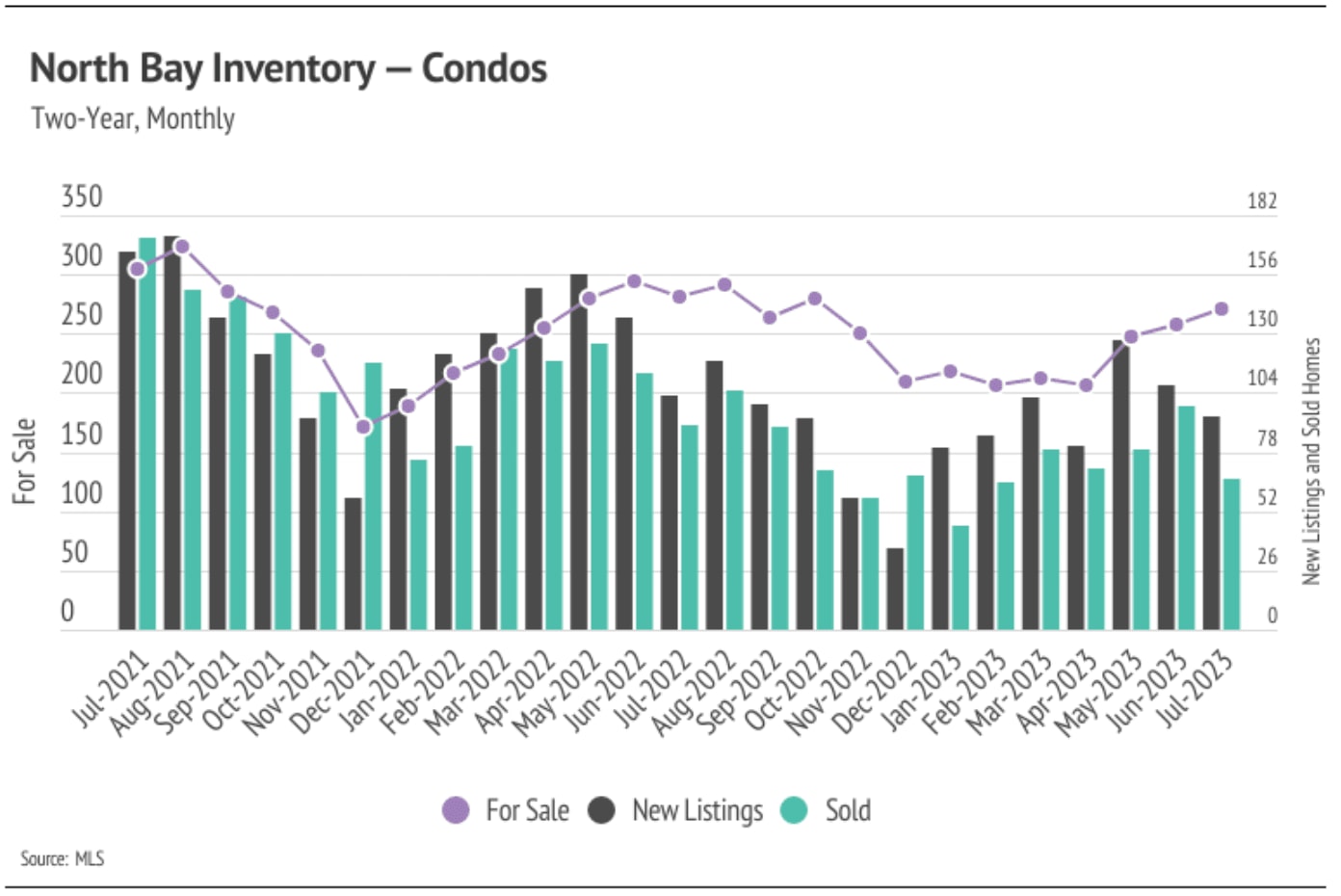
Single-family home and condo inventory, sales, and new listings rose in the first half of the year, although all remain at depressed levels. Typically, inventory peaks in July or August and declines through December or January. Single-family home inventory seems to have peaked in June, so we will likely see fewer transactions in the coming months. Currently, inventory is so low relative to demand that any amount of new listings is good for the market. However, new listings were unusually low from January through July 2023, which has directly impacted both inventory and sales. The number of home sales is, in part, a function of the number of active listings and new listings coming to market. Since January 2023, sales jumped 83% while new listings rose 66%, whereas last year, for example, sales rose 36% and new listings increased 50% by July.
 
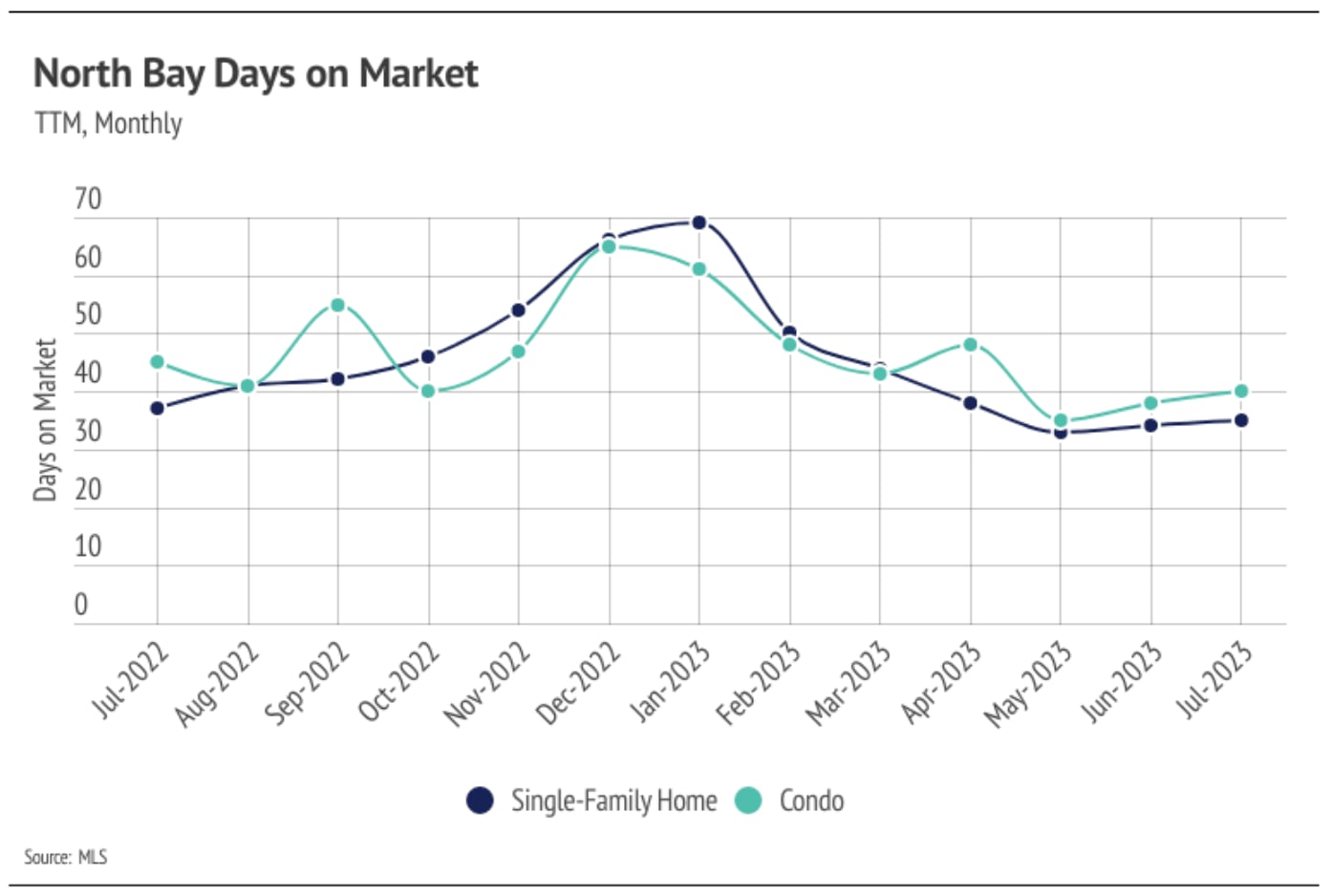
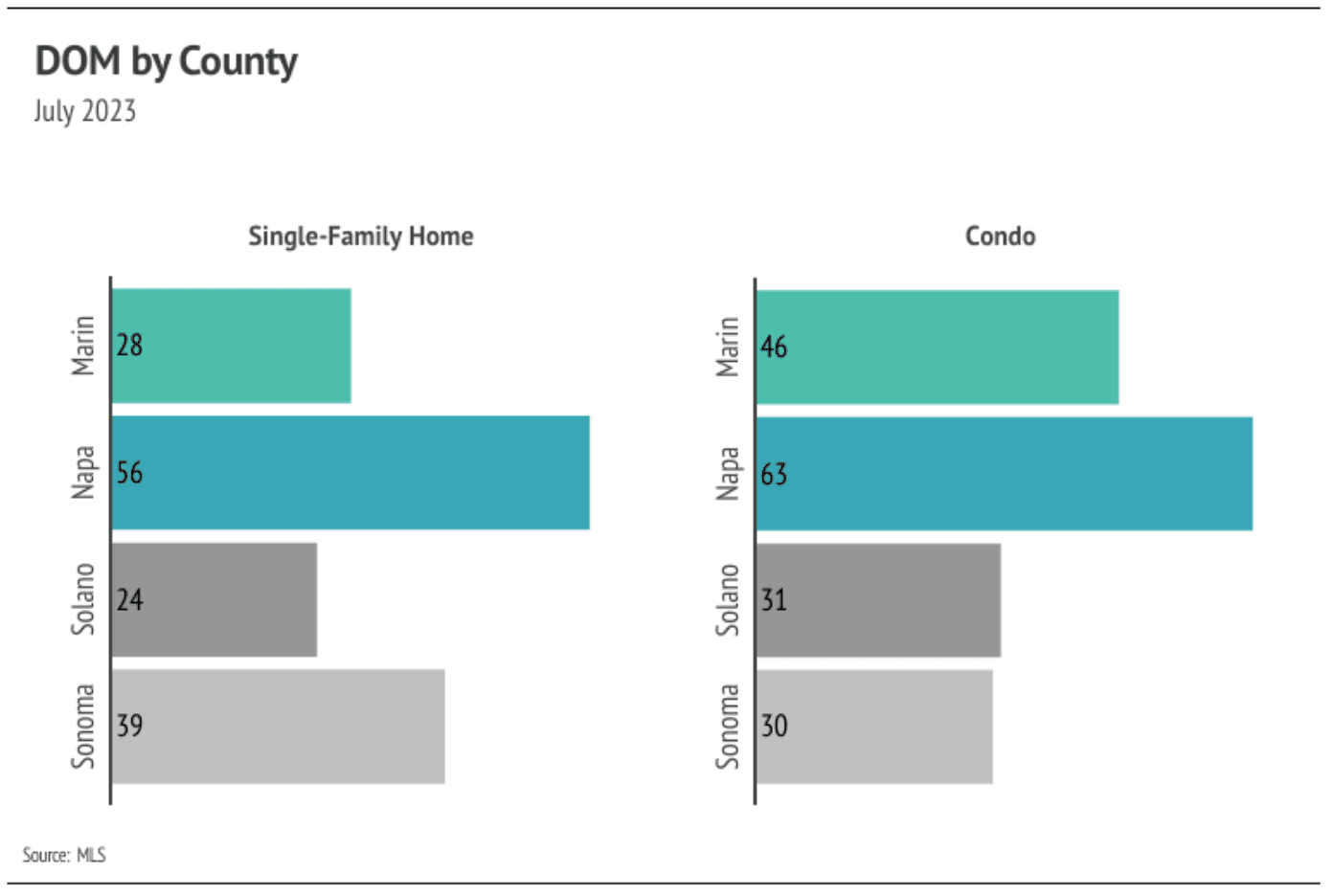
As tight inventory levels continue, sellers are gaining negotiating power. In January 2023, the average seller received 93% of list price compared to 98% of list in July. Inventory will almost certainly remain historically low for the year, and the market will remain competitive in the third quarter.
 

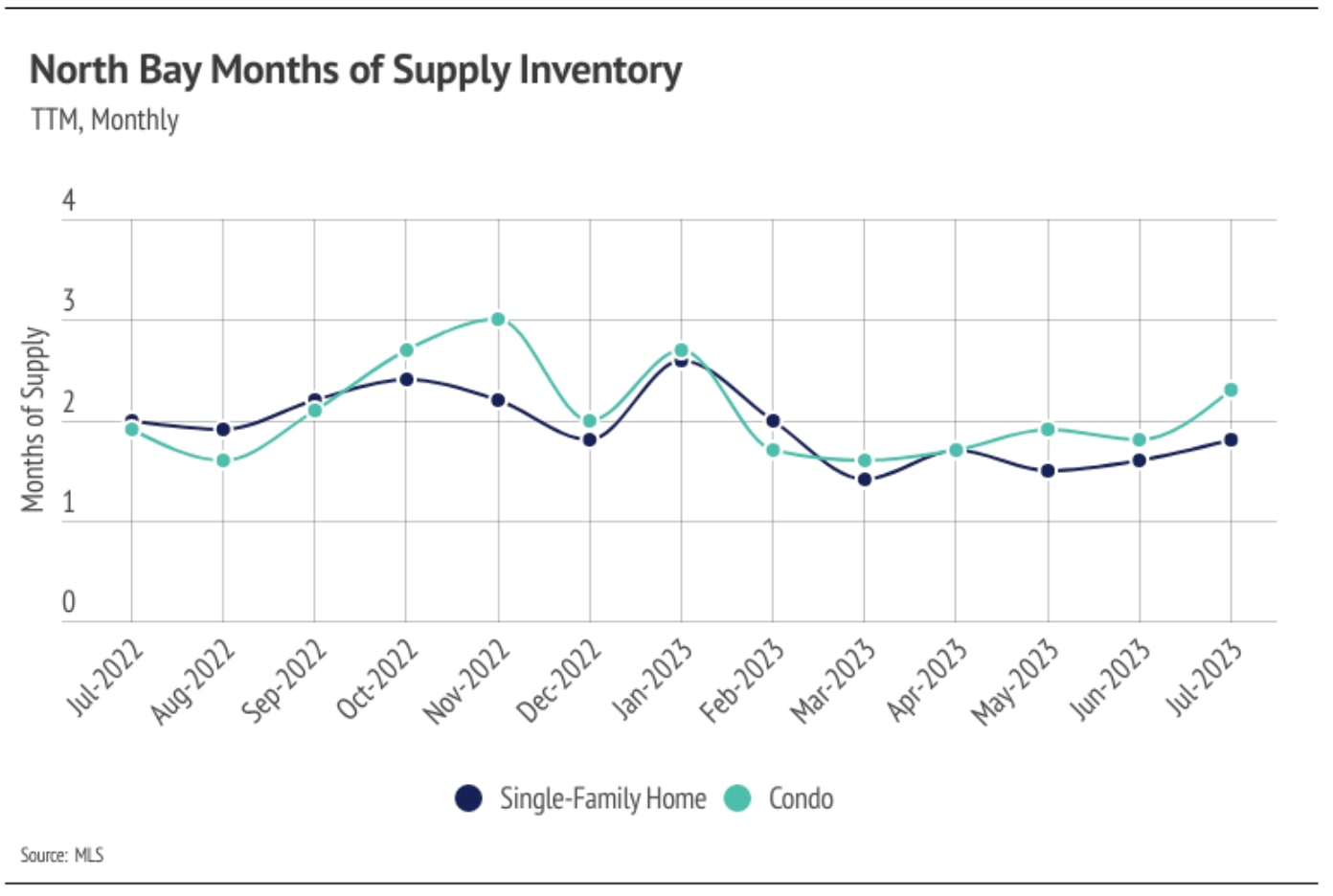
Months of Supply Inventory remained under two months in July, indicating a strong sellers’ market

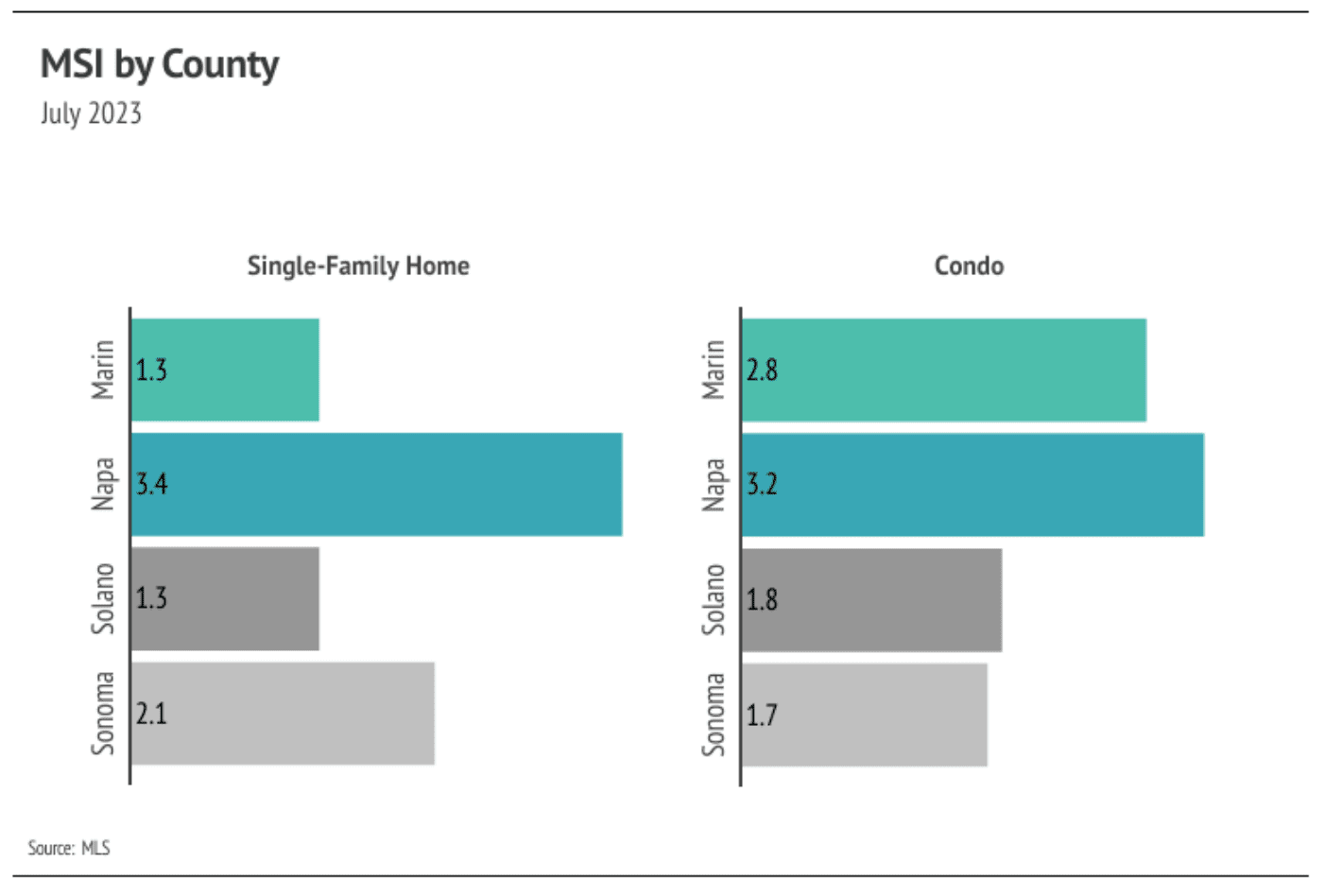
Months of Supply Inventory (MSI) quantifies the supply/demand relationship by measuring how many months it would take for all current homes listed on the market to sell at the current rate of sales. The long-term average MSI is around three months in California, which indicates a balanced market. An MSI lower than three indicates that there are more buyers than sellers on the market (meaning it’s a sellers’ market), while a higher MSI indicates there are more sellers than buyers (meaning it’s a buyers’ market). The North Bay market tends to favor sellers, especially for single-family homes, which is reflected in its low MSI. MSI has trended even lower over the past six months for single-family homes, meaning the market more strongly favors sellers. The sharp drop in MSI occurred due to the higher proportion of sales relative to active listings and less time on the market. The only exceptions are single-family homes and condos in Napa and condos in Marin, both of which are closer to a balanced market.
 

Local Lowdown Data

Recent Blog Posts

Stay up to date on the latest real estate trends.
Condo vs Single-Family Homes in San Francisco: What Buyers Are Prioritizing in 2026

Michelle Kim  |  May 22, 2026

A closer look at how buyers are comparing condos and single-family homes in the 2026 San Francisco housing market based on lifestyle, budget, and long-term goals.

Living Near Golden Gate Park: Why Buyers Prioritize Access to Green Space in San Francisco

Michelle Kim  |  May 15, 2026

A closer look at why San Francisco buyers continue to prioritize neighborhoods near Golden Gate Park for outdoor access, walkability, and long-term livability.

Languages We Speak at Mosaik Real Estate: Serving the Bay Area Through Better Communication

Michelle Kim  |  May 8, 2026

A look at how Mosaik Real Estate supports Bay Area buyers and sellers through multilingual communication and local market expertise.

Is the San Francisco Housing Market Rebounding in 2026?

Michelle Kim  |  May 1, 2026

A closer look at San Francisco housing market trends in 2026 and what buyers and sellers should expect moving forward.

The Local Lowdown: April 2026

Michelle Kim  |  May 1, 2026

Quick Take: Median home sale prices ticked up slightly on both a month-over-month and year-over-year basis in February, continuing the holding pattern we've seen in re… Read more

The Local Lowdown: April 2026

Michelle Kim  |  May 1, 2026

Quick Take: Median sale prices rebounded in Sonoma County with a 1.16% year-over-year gain, while Napa County continued to struggle with a 10.61% decline. Inventory re… Read more

We Would Love to Meet You!

You’ve got questions and we can’t wait to answer them.