Leave a Message

Thank you for your message. We will be in touch with you shortly.

The Local Lowdown: November 2024

Michelle Kim  |  December 1, 2024

The Local Lowdown: November 2024

The Local Lowdown

Quick Take:
  • Median home price contractions in the third and now fourth quarter are in line with seasonal expectations. Prices will likely decline through January 2025.
  • Total inventory decreased 11.7% month over month, as new listings fell and sales increased. However, we expect inventory to decline and the overall market to slow over the next three months.
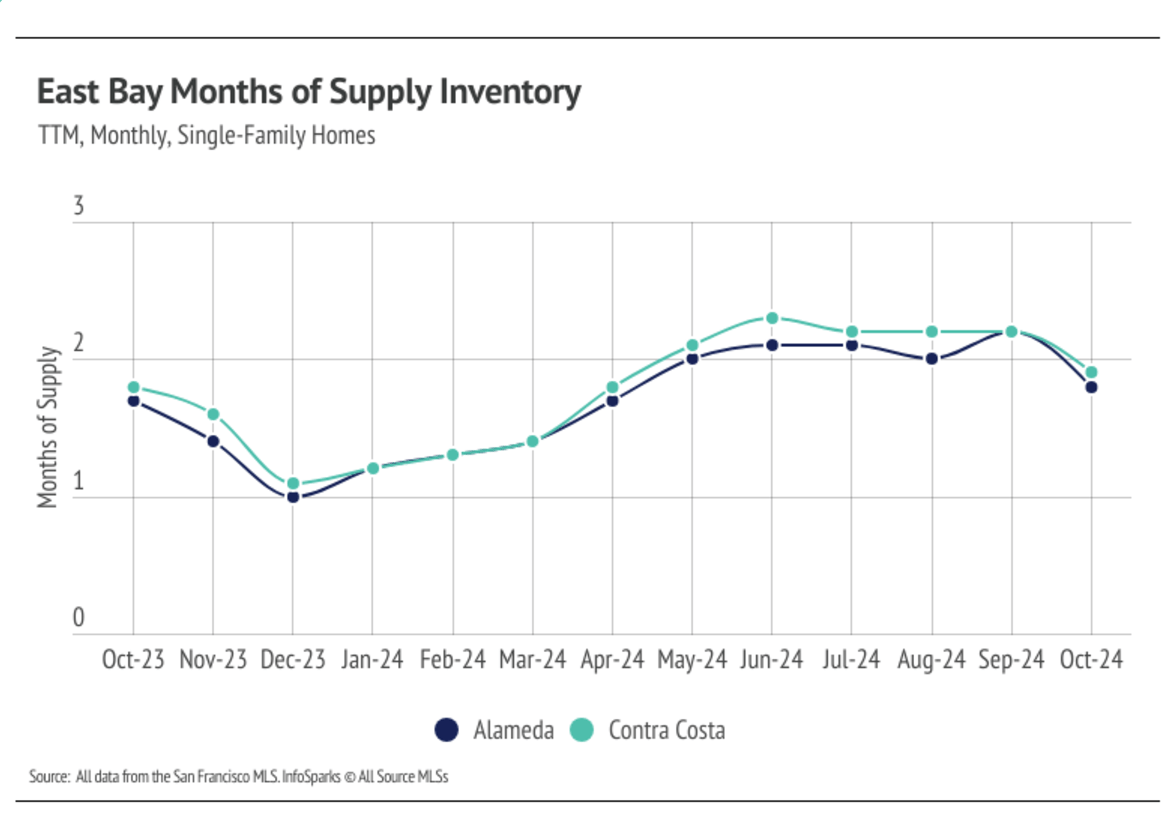
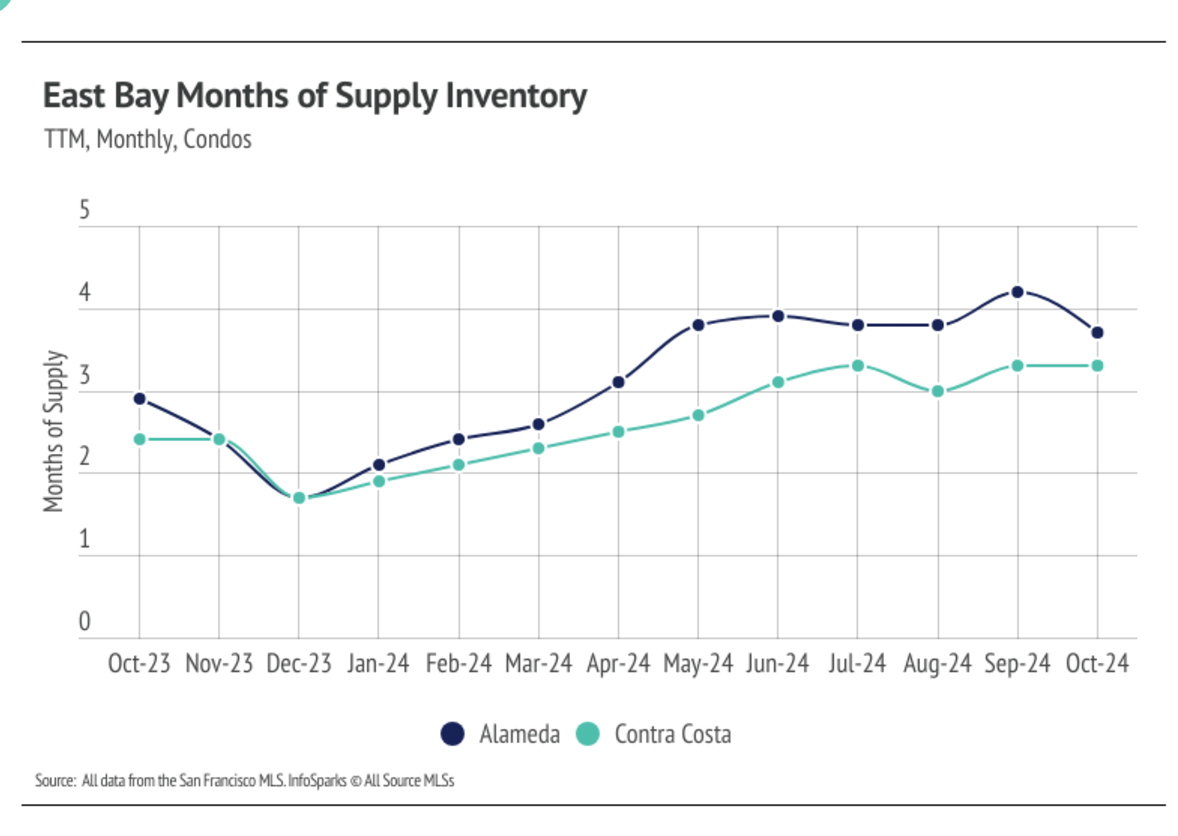
  • Months of Supply Inventory still indicates a sellers’ market in the East Bay for single-family homes, but for condos, MSI implies the market now favors buyers.
Note: You can find the charts/graphs for the Local Lowdown at the end of this section.
 

Median home prices declined slightly month over month in the East Bay

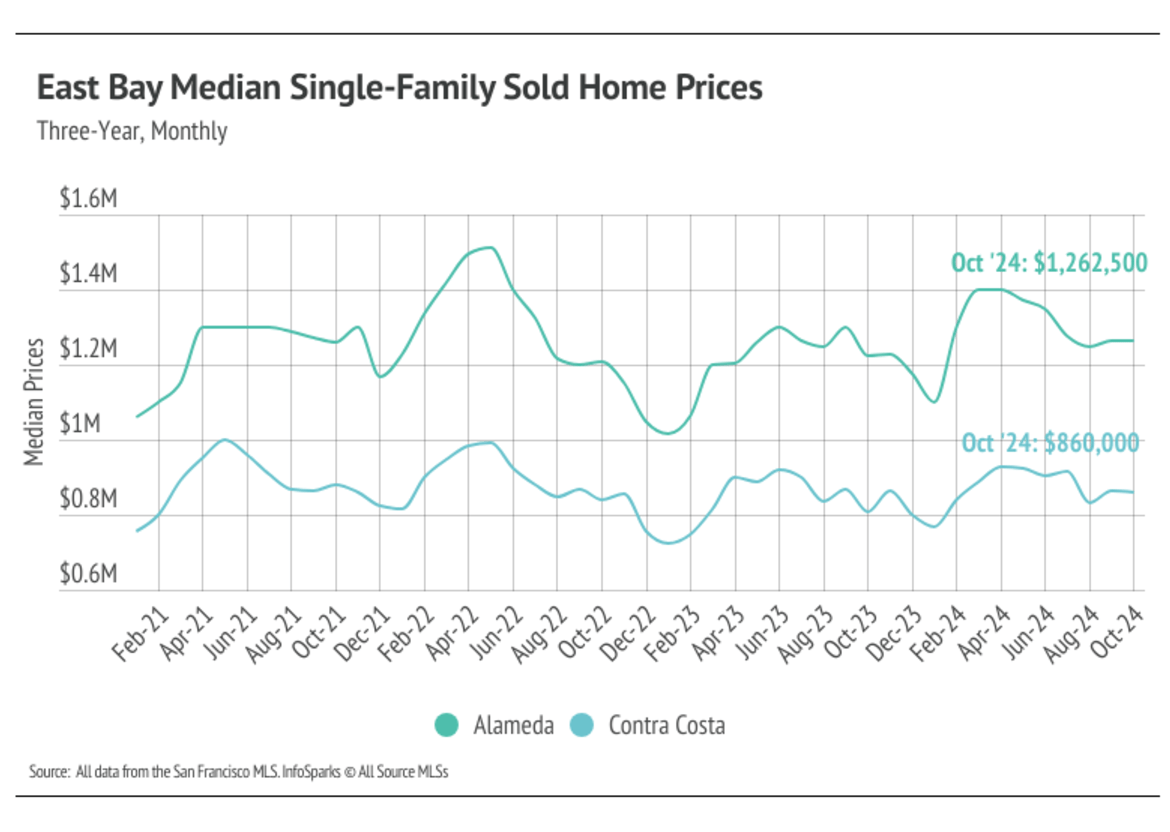
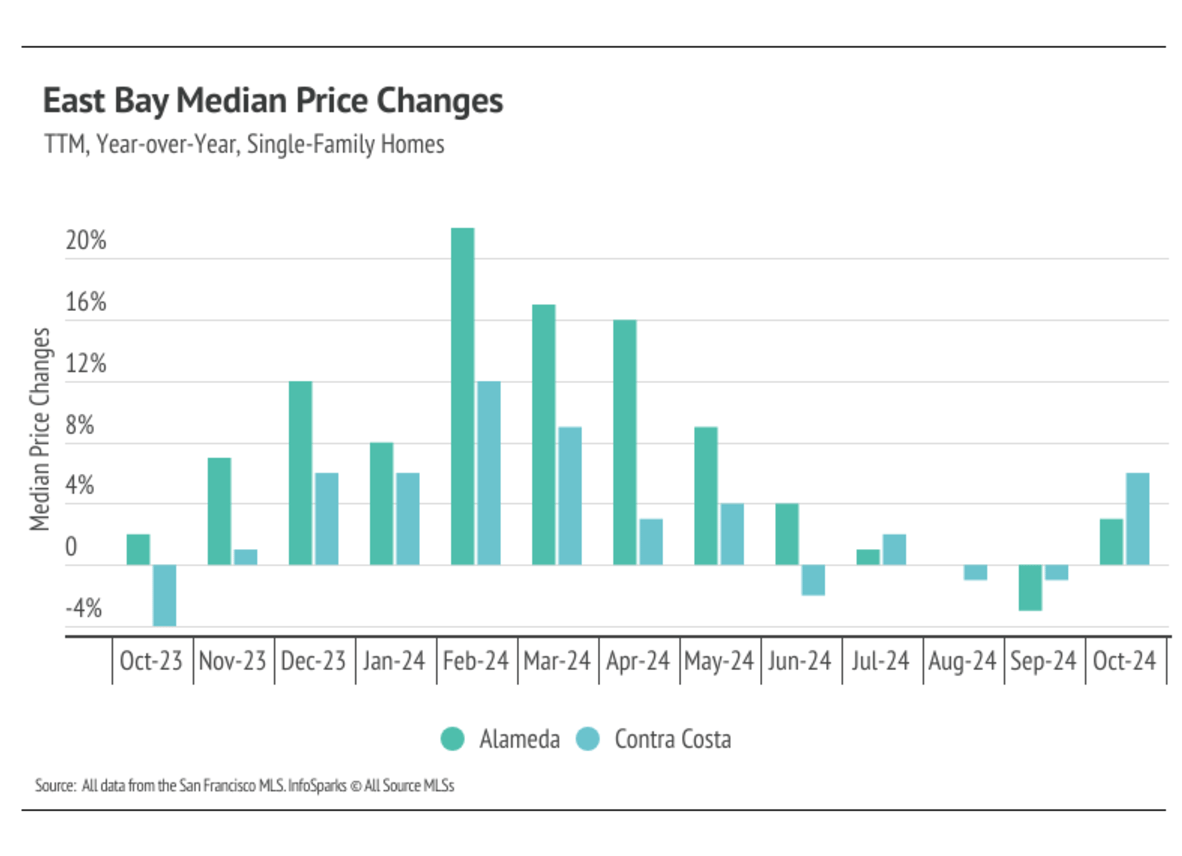
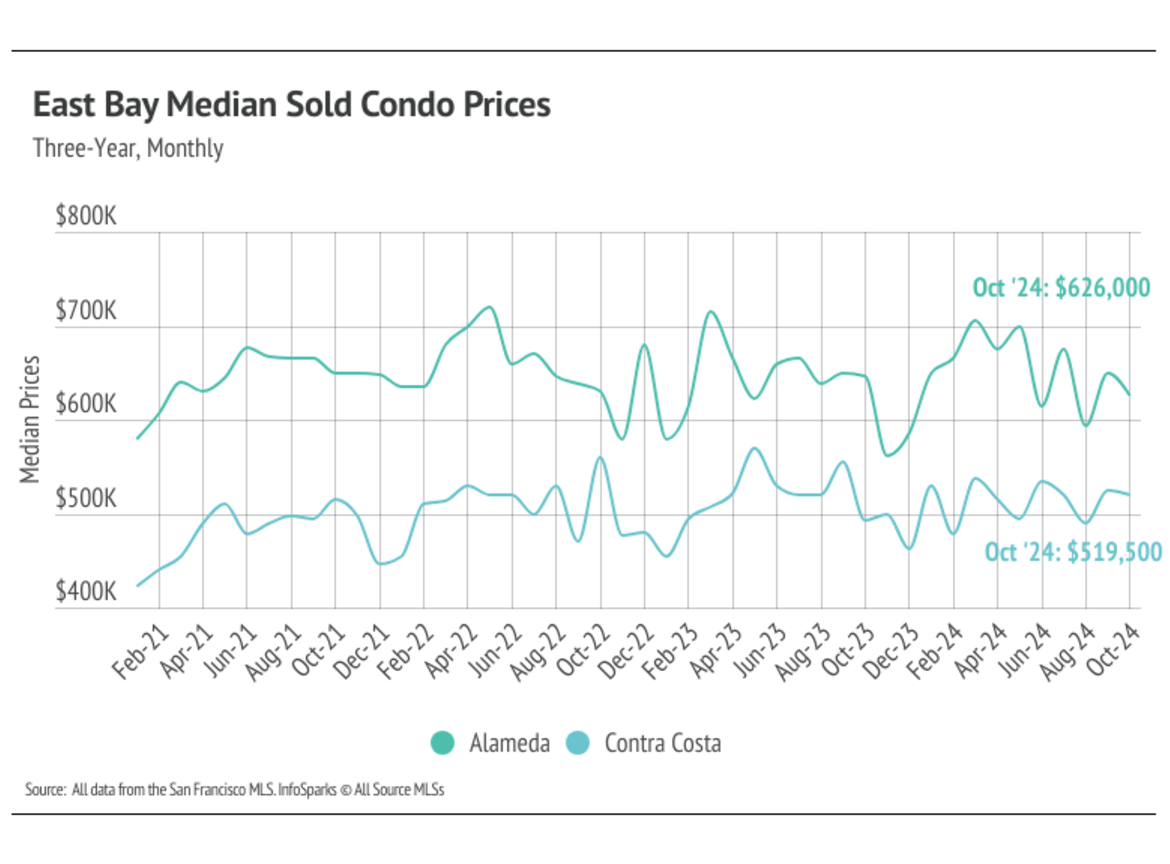
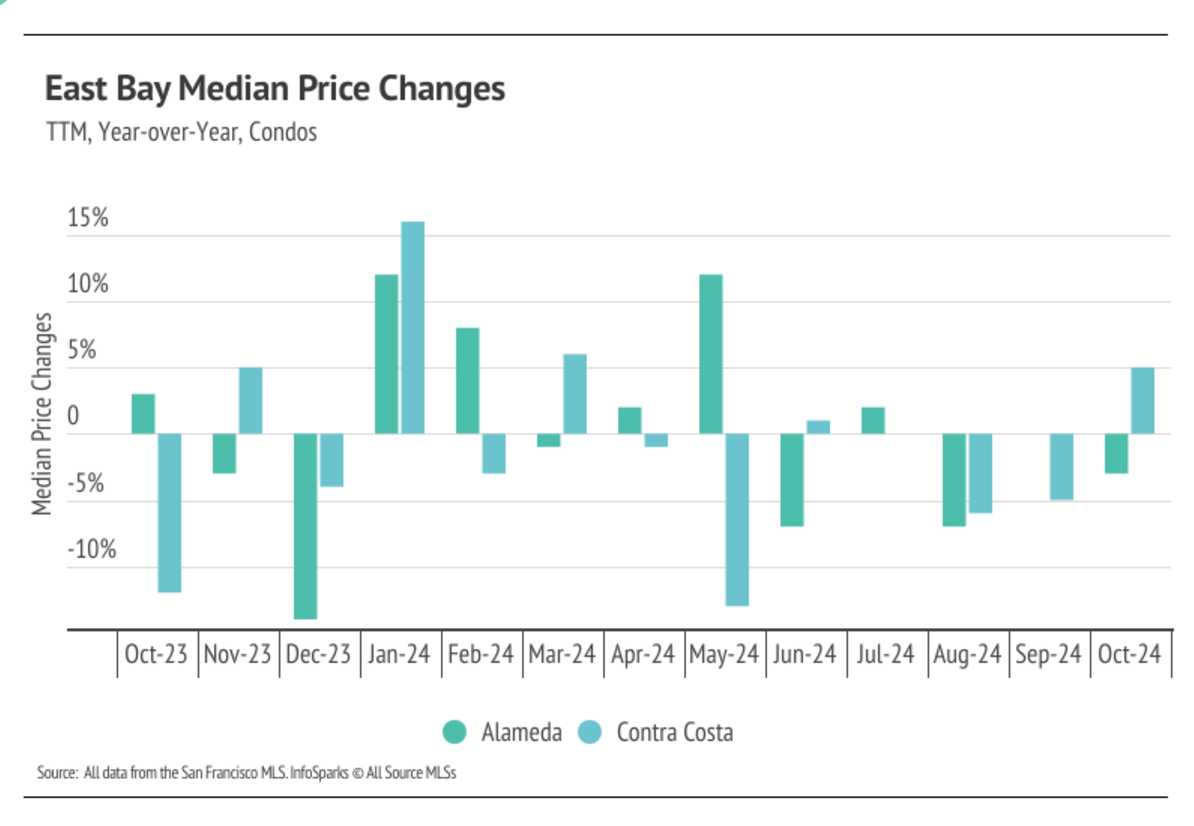
In the East Bay, home prices haven’t been largely affected by rising mortgage rates after the initial period of price correction from May 2022 to January 2023. Low, but growing, inventory and high demand have more than offset the downward price pressure from higher mortgage rates. Year to date, in October, the median single-family home and condo prices rose across the East Bay. Year over year, for single-family homes, prices rose 3% in Alameda and 6% in Contra Costa, and for condos, prices were down 3% in Alameda and up 5% in Contra Costa. Prices typically peak in the summer months, and the mild contraction after the post-summer peak has fallen in line with expectations. Home prices will likely continue to decline slightly for the next three months.
 
High mortgage rates soften both supply and demand, but home buyers and sellers seemed to tolerate rates near 6% much more than around 7%. Mortgage rates fell significantly from May through September, but rose significantly in October. Now, rates are far closer to 7% than 6%, so we expect sales to slow starting in November.
 

Sales rose, while inventory and new listings fell

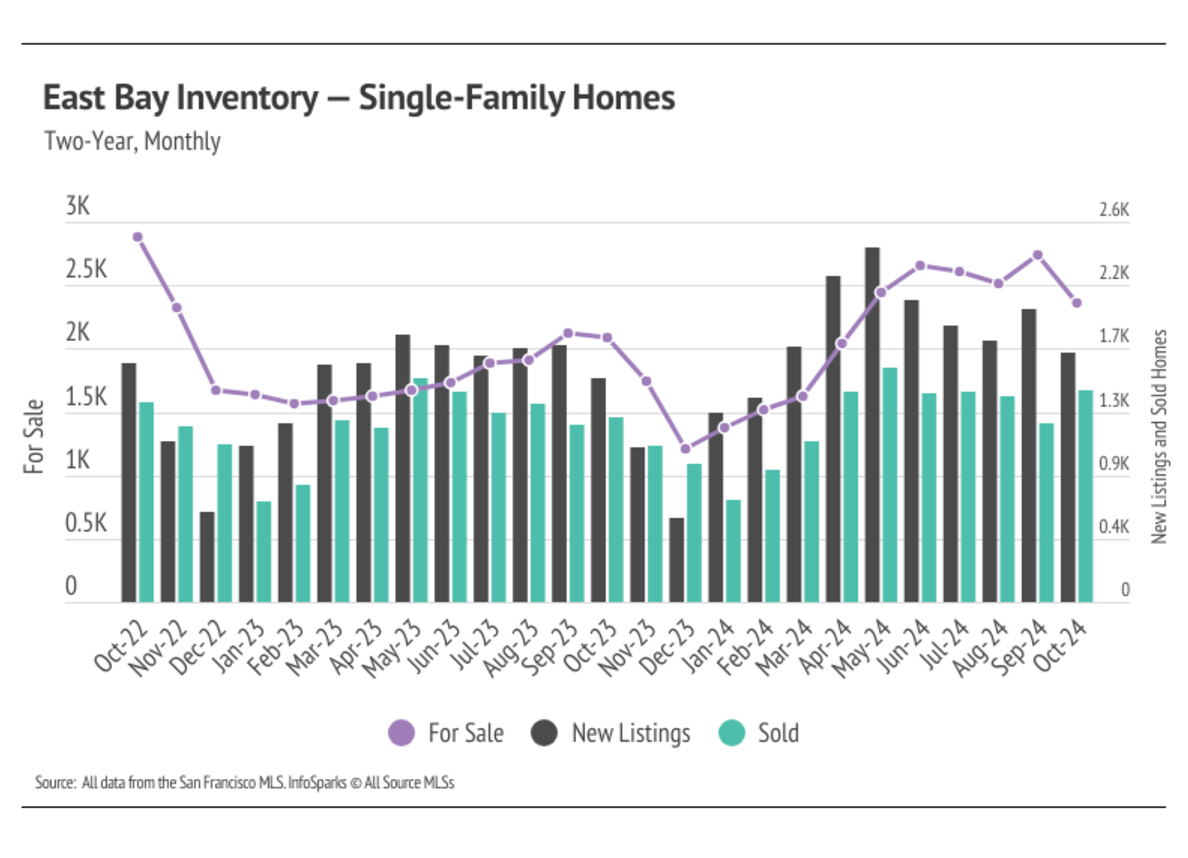
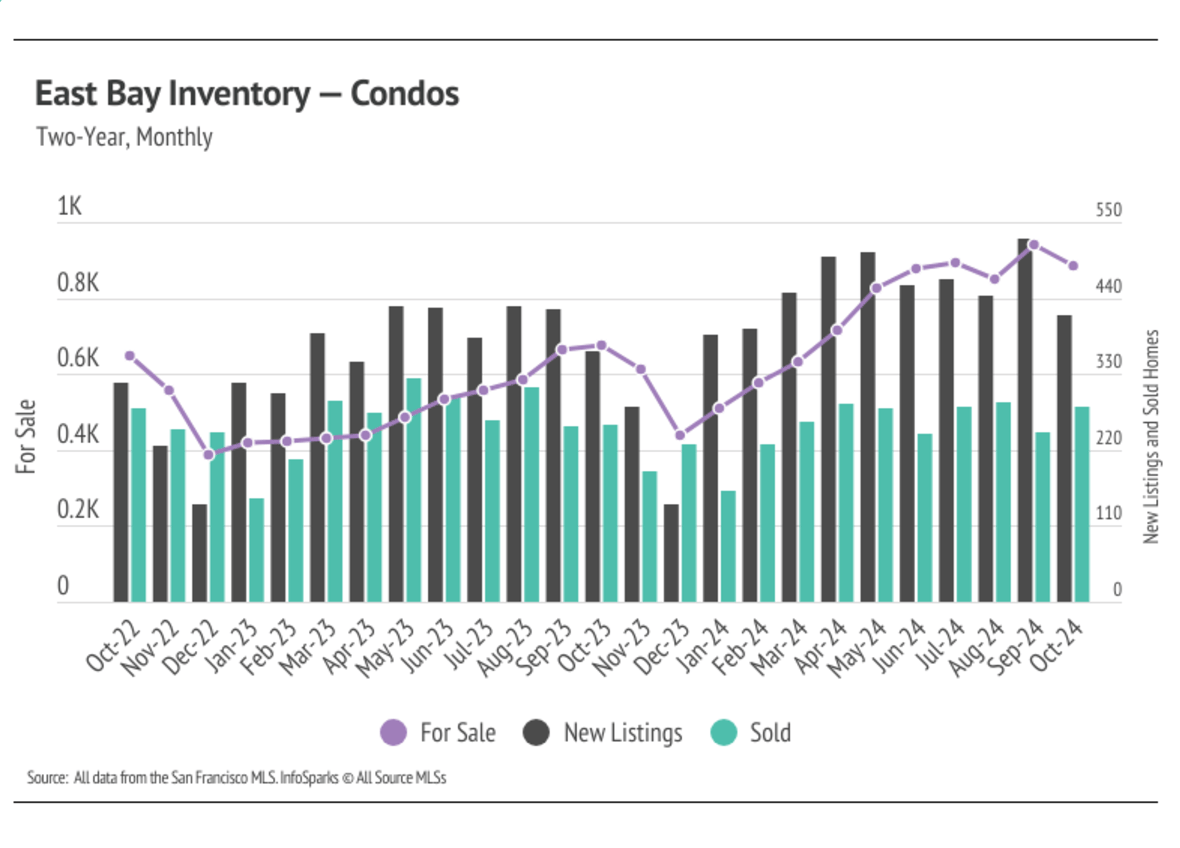
The 2024 housing market has looked progressively healthier with each passing month. We’re far enough into the year to know that inventory levels are about as good as we could’ve hoped, although single-family home inventory is still lower than we would like. In 2023, single-family home and condo inventory followed fairly typical seasonal trends, but at significantly depressed levels. Low inventory and fewer new listings slowed the market considerably last year. Even though sales volume this year was similar to last, far more new listings have come to the market, which has allowed inventory to grow. Condo inventory even reached a four-year high in September before declining in October. For single-family homes, inventory is up 15% year over year.
 
Typically, inventory begins to increase in January or February, peaking in July or August before declining once again from the summer months to the winter. It’s looking like 2024 inventory, sales, and new listings will resemble historically seasonal patterns, and at more normal levels than last year. However, inventory still increased in September, which is atypical. Falling mortgage rates have brought buyers and sellers back to the market during the time of year the market tends to slow significantly. Sales and homes under contract rose in October, which is fairly normal from a historical standpoint. We expect sales to slow over the next three months.


Months of Supply Inventory in October 2024 indicated a sellers’ market for single-family homes and a buyers’ market for condos

Months of Supply Inventory (MSI) quantifies the supply/demand relationship by measuring how many months it would take for all current homes listed on the market to sell at the current rate of sales. The long-term average MSI is around three months in California, which indicates a balanced market. An MSI lower than three indicates that there are more buyers than sellers on the market (meaning it’s a sellers’ market), while a higher MSI indicates there are more sellers than buyers (meaning it’s a buyers’ market). The East Bay market tends to favor sellers, especially for single-family homes, which is reflected in its low MSI. For condos, MSI has trended higher in 2024, causing a shift from a sellers’ market to a buyers’ market. Although single-family home MSI has moved slightly higher, it’s still low, indicating a sellers’ market.
 

Local Lowdown Data


Recent Blog Posts

Stay up to date on the latest real estate trends.
Selling Your Home in San Francisco? Here's How to Attract Serious Buyers From Day One

Michelle Kim  |  July 17, 2026

Discover the strategies that help San Francisco homes stand out, attract serious buyers, and maximize value before they even hit the market.
The Biggest Mistakes Home Sellers Make Before Listing Their Property

Michelle Kim  |  July 10, 2026

Avoid the most common mistakes homeowners make before listing their property and learn how preparation, pricing, and marketing can help you achieve a successful home s… Read more

Why Some Homes Receive Multiple Offers While Others Sit on the Market

Michelle Kim  |  July 6, 2026

Learn the key factors that help San Francisco homes attract multiple offers, from strategic pricing and professional marketing to home presentation and buyer demand.

The Local Lowdown: June 2026

Michelle Kim  |  July 1, 2026

Quick Take: Prices are rising across much of the Bay Area, with San Francisco single-family homes breaching the $2.2 million mark for the first time and the East Bay p… Read more

The Local Lowdown: June 2026

Michelle Kim  |  July 1, 2026

Quick Take: Median sale prices posted gains in three of four counties, with Sonoma County leading the way at 2.33% year-over-year growth, while Marin County saw a 4.70… Read more

The Local Lowdown: June 2026

Michelle Kim  |  July 1, 2026

Quick Take: Prices are on the rise across the board, with single-family homes and condos both posting year-over-year gains for the first time in over a year. Inventory… Read more

We Would Love to Meet You!

You’ve got questions and we can’t wait to answer them.