Leave a Message

Thank you for your message. We will be in touch with you shortly.

The Local Lowdown: July 2023

Michelle Kim  |  July 1, 2023

The Local Lowdown: July 2023

The Local Lowdown

Quick Take:
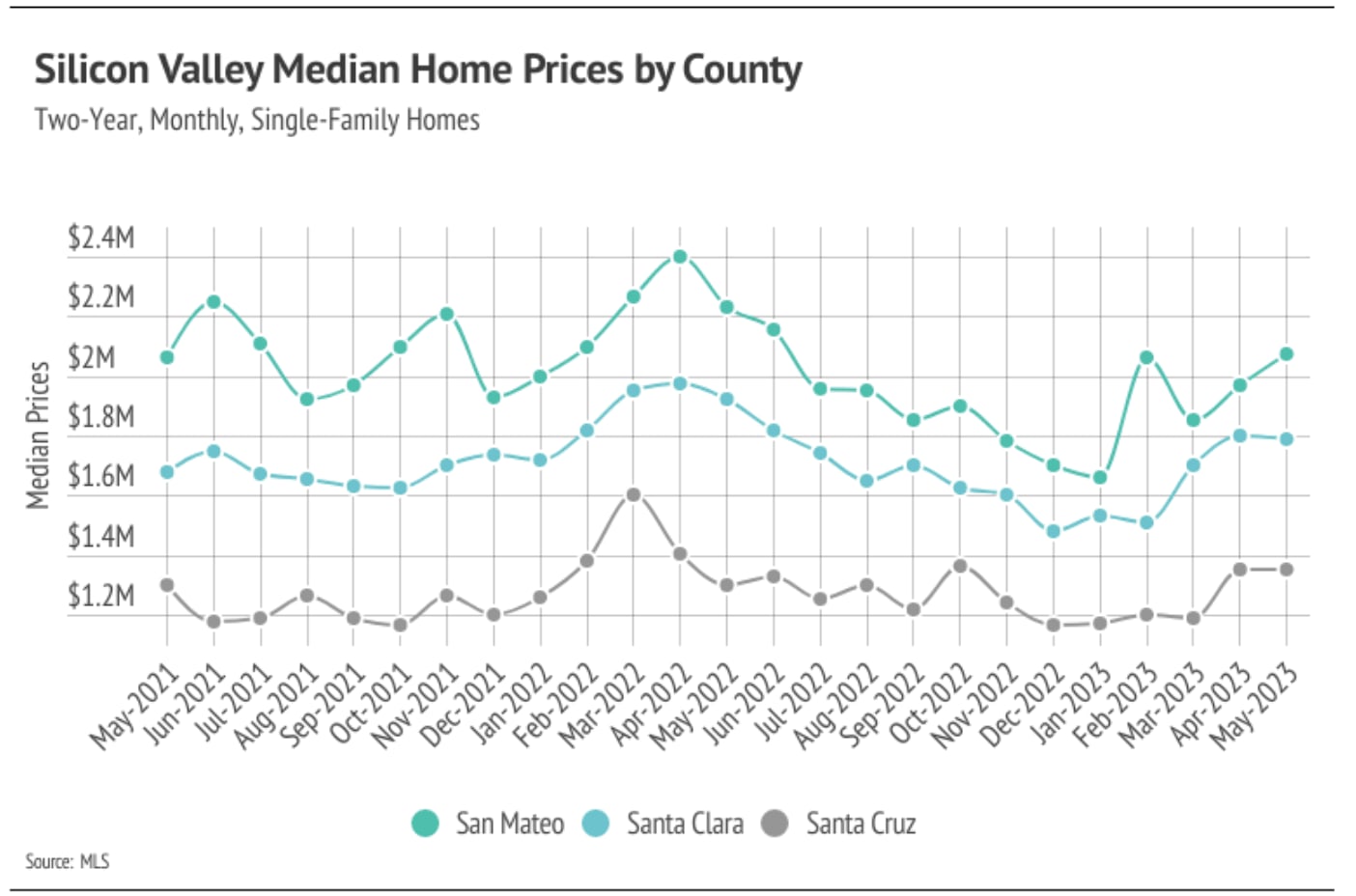
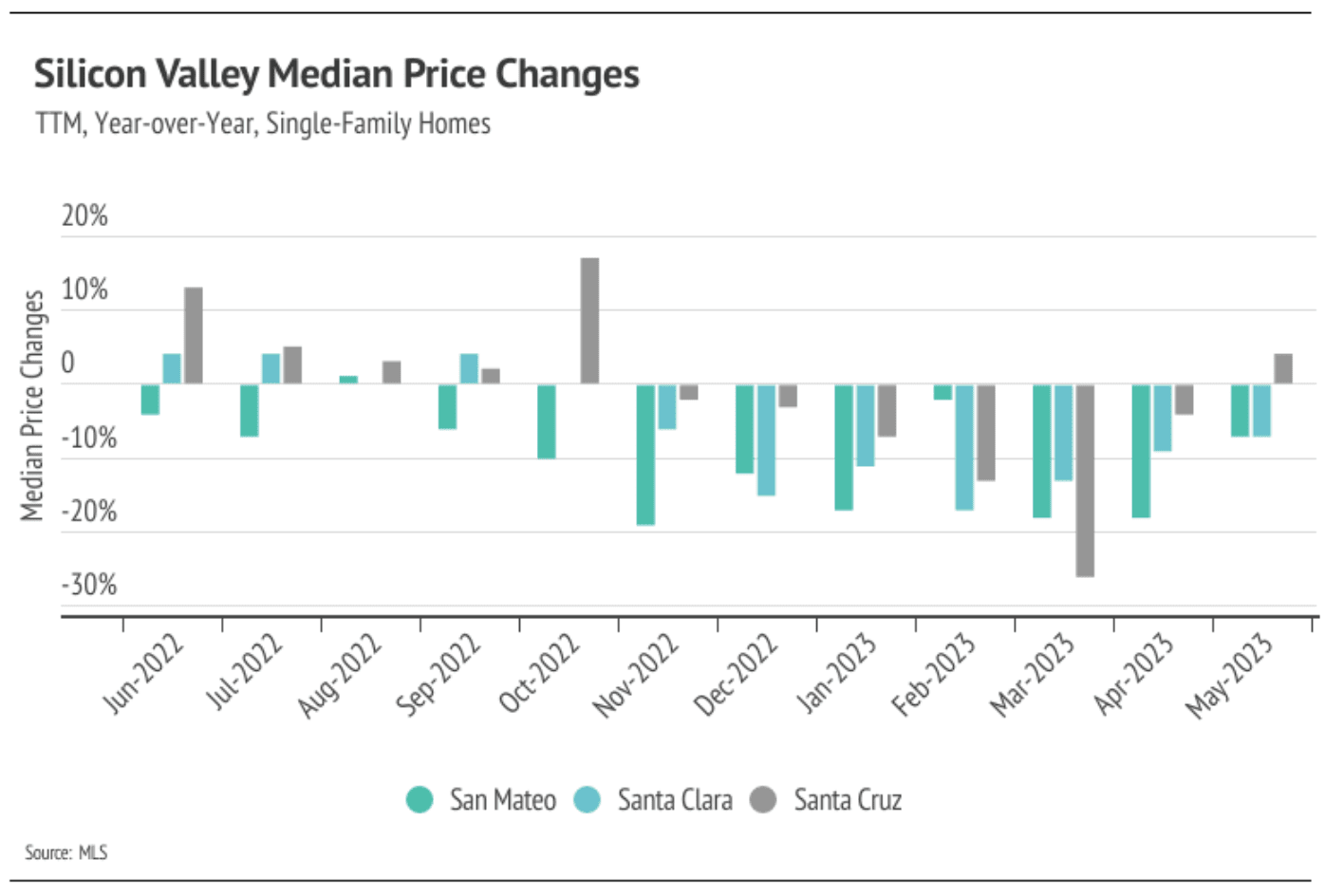
  • Single-family home prices rose significantly year to date in Silicon Valley counties through May 2023. Notably, median single-family home prices in San Mateo and Santa Clara rose over $300,000, highlighting that a healthier market can boost prices significantly despite higher mortgage rates.
  • Sales are growing rapidly as more new listings hit the market to help satisfy excess demand in Silicon Valley, driving prices higher.
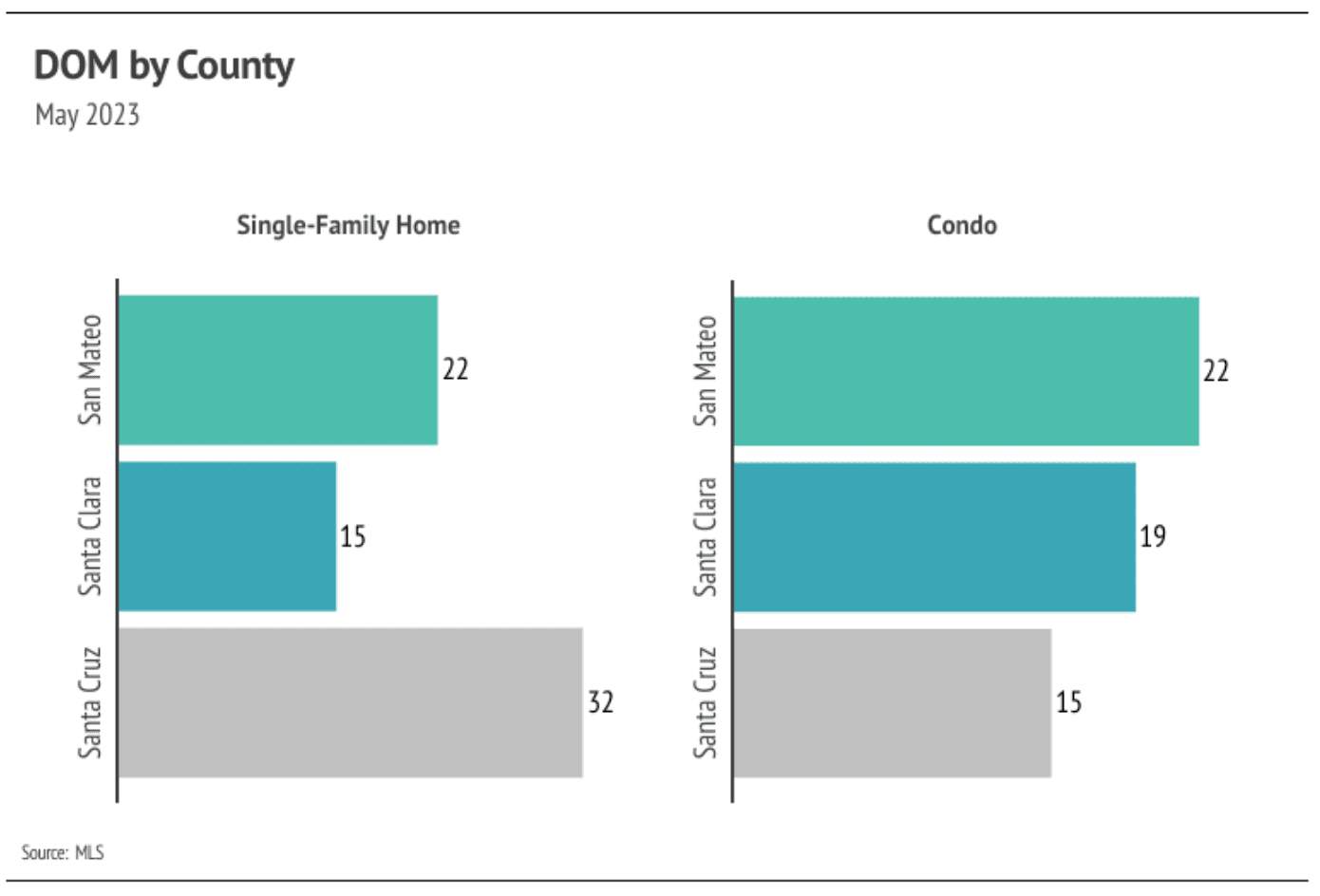
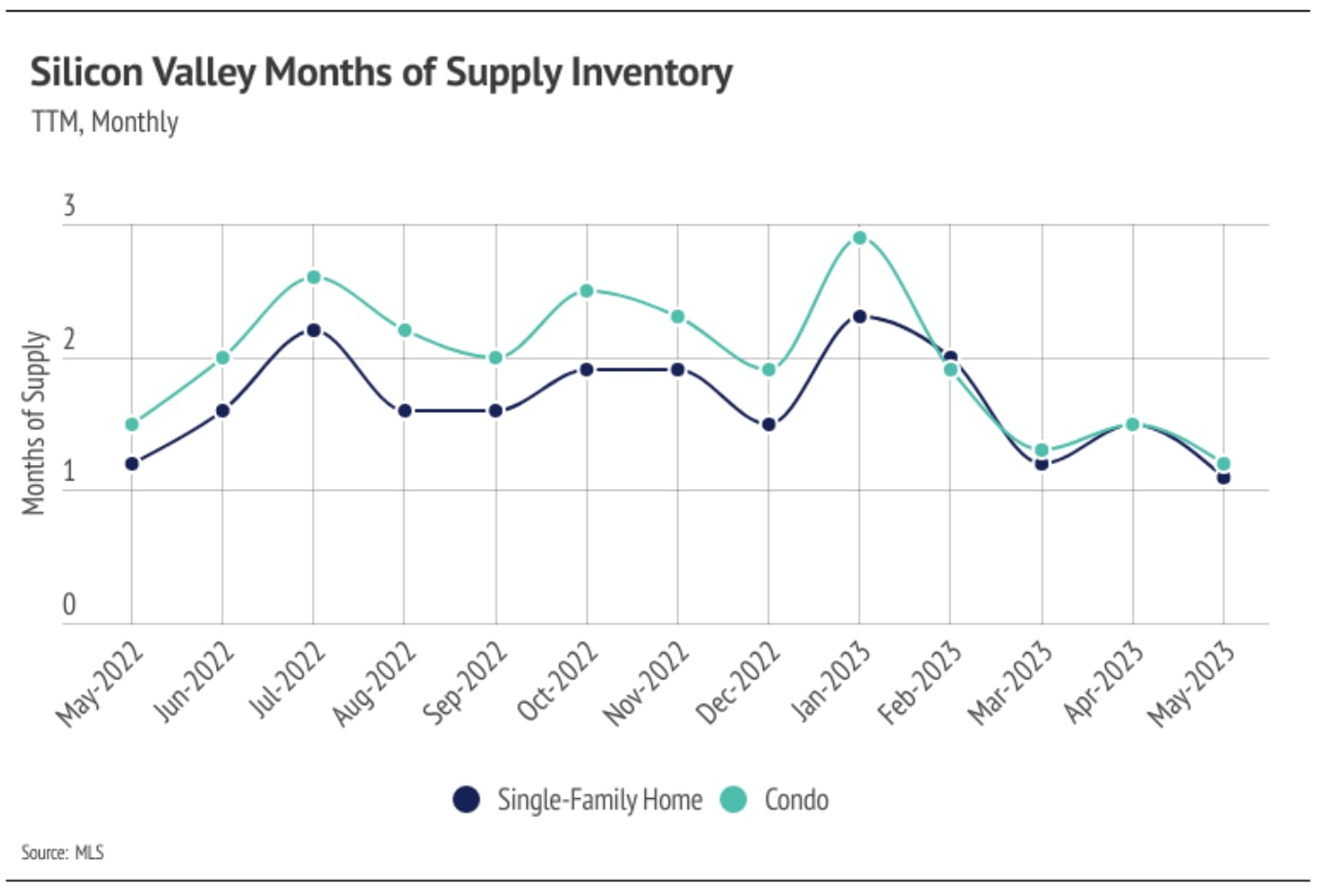
  • Months of Supply Inventory has declined significantly in 2023, homes are selling more quickly, and sellers are receiving a greater percentage of asking price, all of which highlight an increasingly competitive environment for buyers.
Note: You can find the charts/graphs for the Local Lowdown at the end of this section.
 

Higher inventory, higher prices

Price appreciation has been substantial across most of Silicon Valley this year, to say the least. Single-family home prices rose 21% in San Mateo and Santa Clara. Increasing demand and low, but rising inventory are driving the rapid home price appreciation that Silicon Valley has experienced this year. Last year, single-family home prices peaked in the beginning of the year as buyers rushed to lock in a lower mortgage rate. The Fed announced rate hikes at the end of 2021 that would swiftly affect rates in 2022. The average 30-year mortgage rate rose 2% in the first four months of 2022, crossing 5% for the first time since 2011. That 2% jump caused the monthly cost of financing to increase 27%, so buyers rightly rushed to the market. As rates rose higher, the market cooled and home prices fell in large part to accommodate the higher cost of a mortgage. Both supply and demand were lower than normal in the second half of 2022.
 
In 2023, demand started to rise again despite elevated mortgage rates and was met by a high number of new listings. Price increases this year have been largely a function of more homes coming to market and inventory growth, which is counterintuitive to supply and demand. Supply was so low that more homes were able to better match buyers to a desirable property, giving sellers more pricing power. As demand increases through the summer months, competition among buyers will climb with it, raising home prices.
 

Inventory is rising, but sales are growing faster than new listings

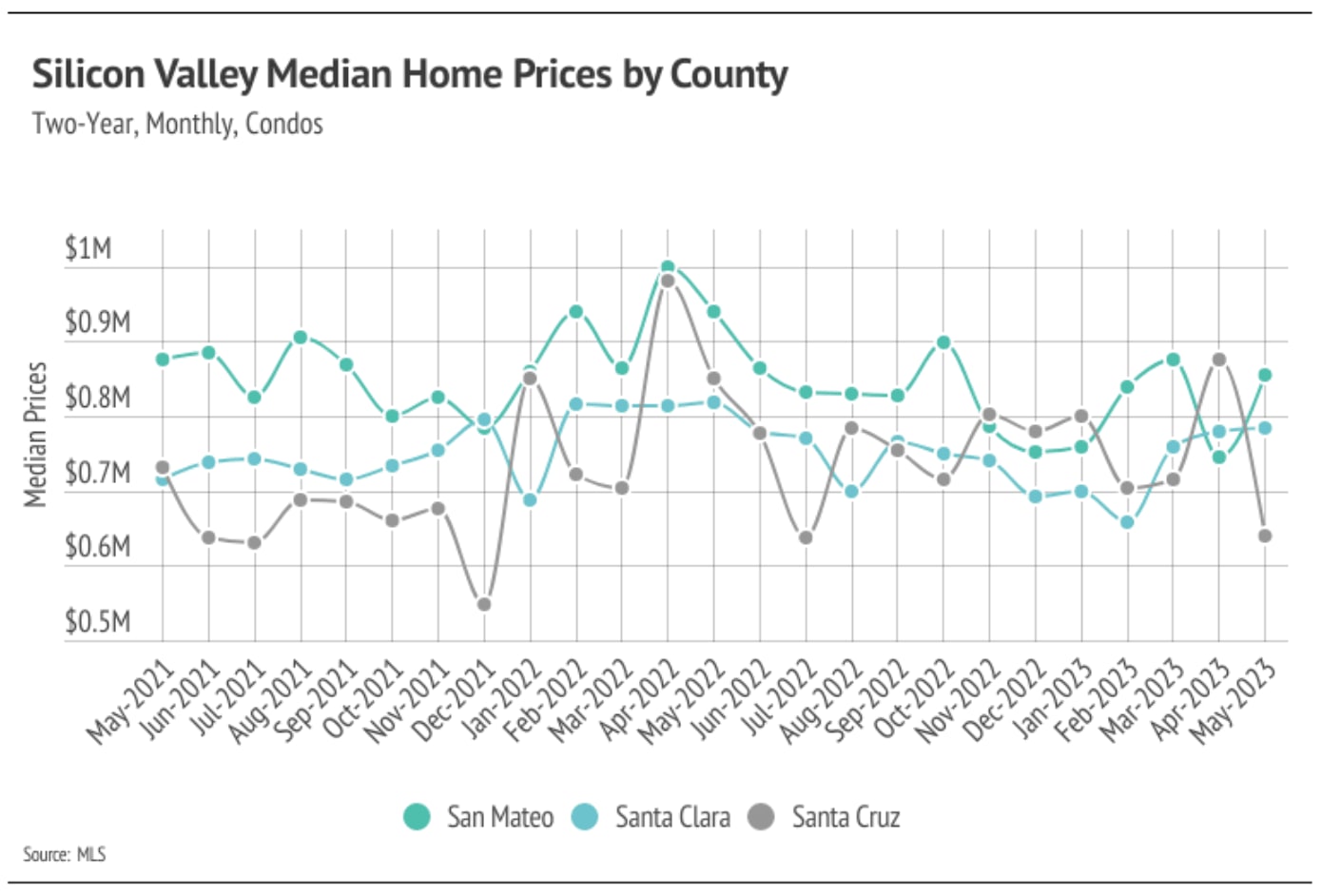
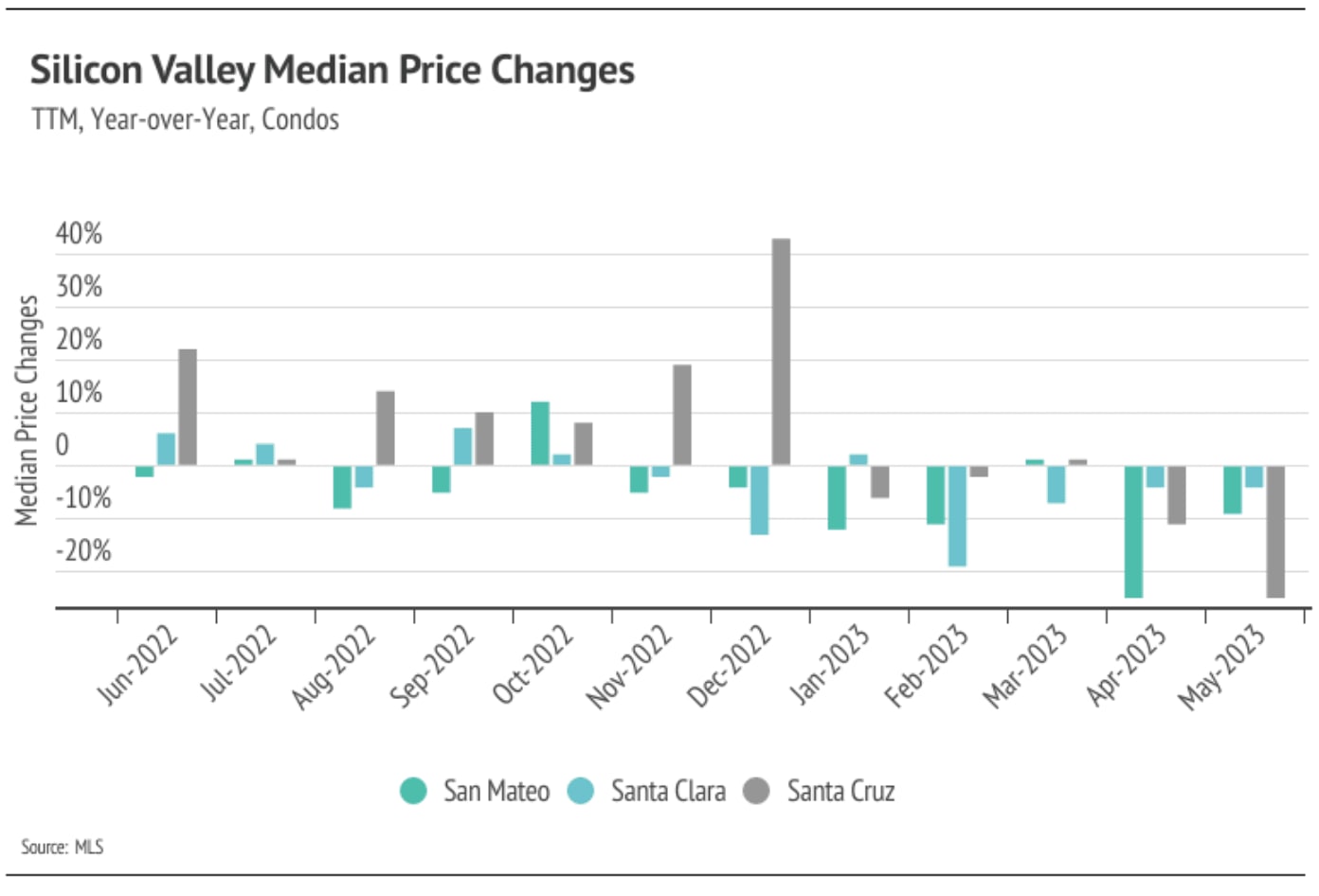
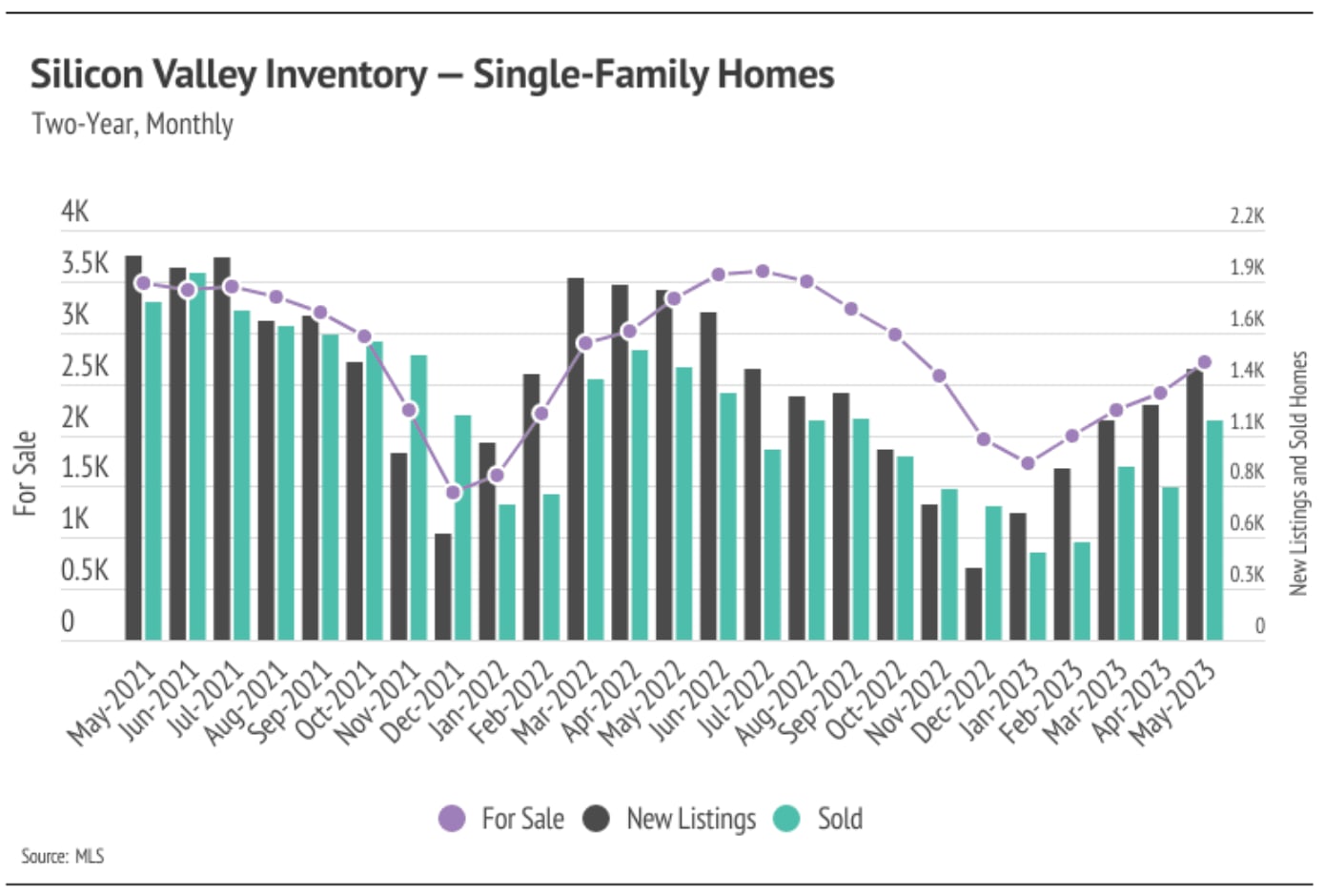
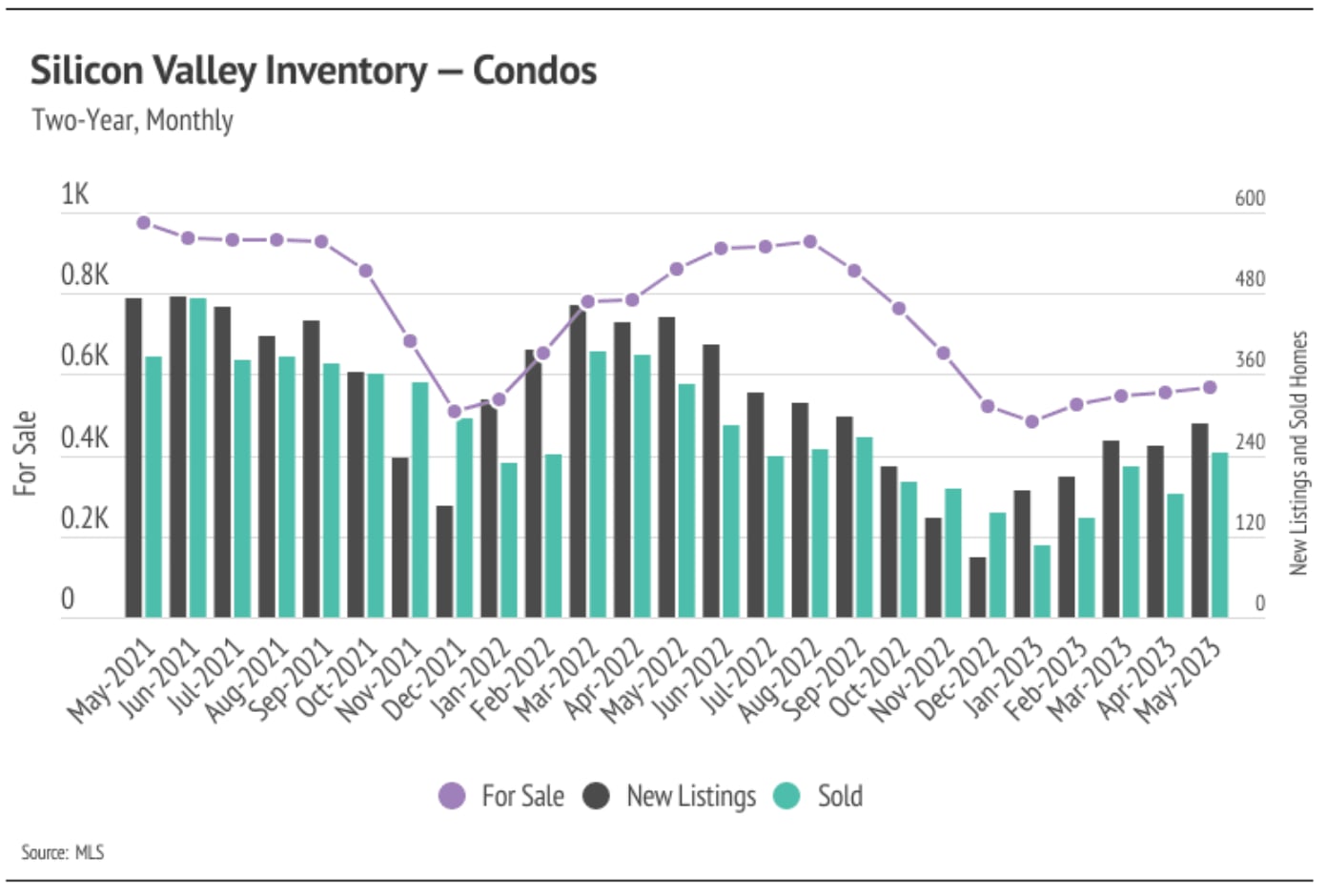
Single-family home and condo inventory, sales, and new listings rose over the past four months, although all remain at depressed levels. The number of home sales is, in part, a function of the number of active listings and new listings coming to market. Even though all those metrics are far below typical levels, these trends are all signs of a healthier market. Currently, inventory is still quite low relative to demand, so far more new listings could come to the market. Potential sellers who have fully paid off their property are in a particularly good position if they don’t have to finance their next property after the sale of their home. Since January, sales jumped 148% while new listings rose 100%.
 
As buyer competition has ramped up and sellers are gaining negotiating power, sellers are receiving more of their listed price. In January 2023, the average seller received 94% of list price compared to 102% of list in May. Inventory will almost certainly remain depressed for the rest of the year, and the market will likely only get more competitive in the summer months.
 

Months of Supply Inventory declined in May, moving further into a sellers’ market

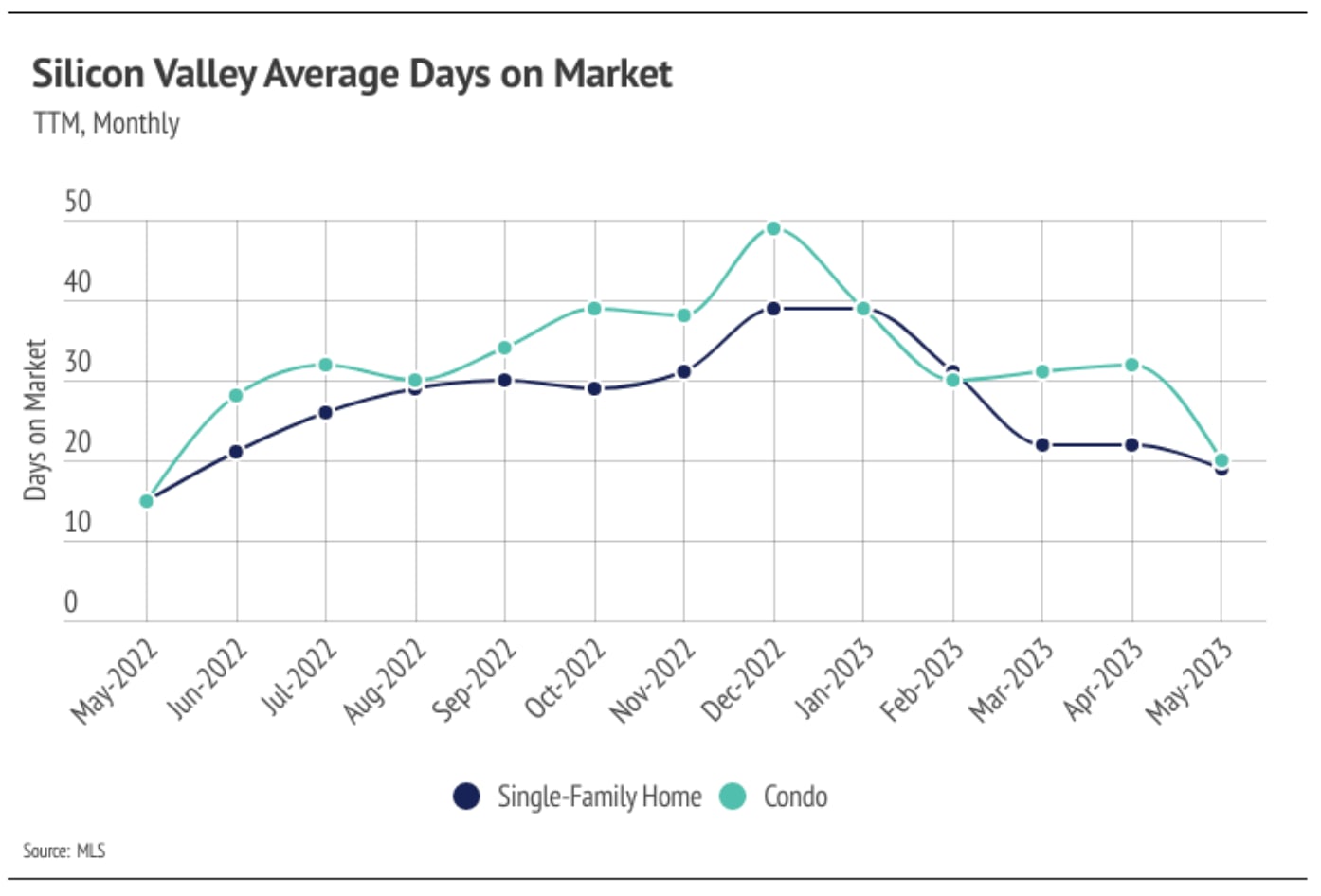
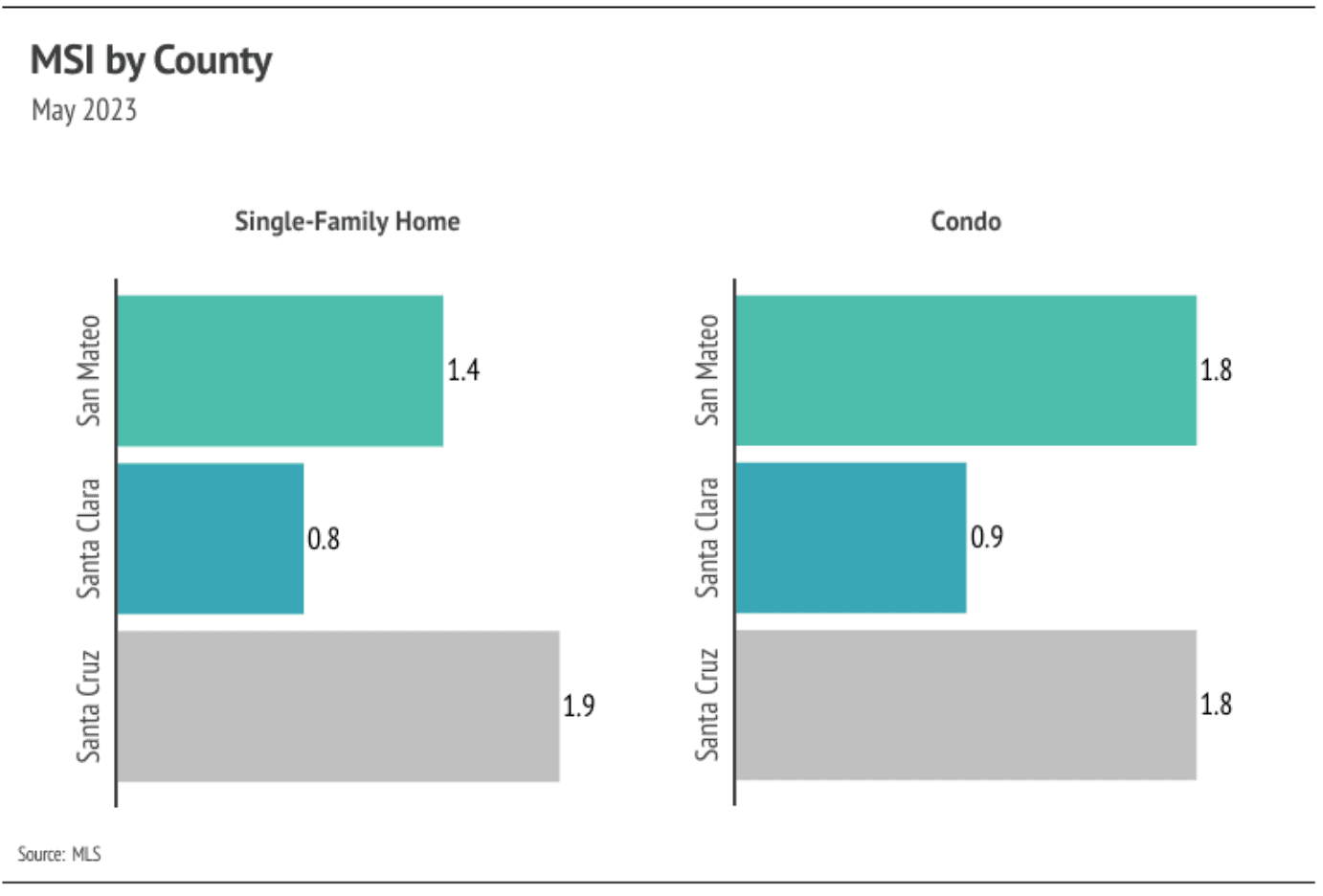
Months of Supply Inventory (MSI) quantifies the supply/demand relationship by measuring how many months it would take for all current homes listed on the market to sell at the current rate of sales. The long-term average MSI is around three months in California, which indicates a balanced market. An MSI lower than three indicates that there are more buyers than sellers on the market (meaning it’s a sellers’ market), while a higher MSI indicates there are more sellers than buyers (meaning it’s a buyers’ market). The Silicon Valley market tends to favor sellers, especially for single-family homes, which is reflected in its low MSI. MSI has trended even lower over the past four months for both single-family homes and condos, meaning the market more strongly favors sellers. The sharp drop in MSI occurred due to the higher proportion of sales relative to active listings and less time on the market.
 

Local Lowdown Data

Recent Blog Posts

Stay up to date on the latest real estate trends.

Selling Your Home in San Francisco? Here's How to Attract Serious Buyers From Day One

Michelle Kim  |  July 17, 2026

Discover the strategies that help San Francisco homes stand out, attract serious buyers, and maximize value before they even hit the market.

The Biggest Mistakes Home Sellers Make Before Listing Their Property

Michelle Kim  |  July 10, 2026

Avoid the most common mistakes homeowners make before listing their property and learn how preparation, pricing, and marketing can help you achieve a successful home s… Read more

Why Some Homes Receive Multiple Offers While Others Sit on the Market

Michelle Kim  |  July 6, 2026

Learn the key factors that help San Francisco homes attract multiple offers, from strategic pricing and professional marketing to home presentation and buyer demand.

The Local Lowdown: June 2026

Michelle Kim  |  July 1, 2026

Quick Take: Prices are rising across much of the Bay Area, with San Francisco single-family homes breaching the $2.2 million mark for the first time and the East Bay p… Read more

The Local Lowdown: June 2026

Michelle Kim  |  July 1, 2026

Quick Take: Median sale prices posted gains in three of four counties, with Sonoma County leading the way at 2.33% year-over-year growth, while Marin County saw a 4.70… Read more
The Local Lowdown: June 2026

Michelle Kim  |  July 1, 2026

Quick Take: Prices are on the rise across the board, with single-family homes and condos both posting year-over-year gains for the first time in over a year. Inventory… Read more

We Would Love to Meet You!

You’ve got questions and we can’t wait to answer them.