The Big Story
Median home sale prices hit their highest level in a year, as the spring rally has now carried prices above where they were at this time last year.
Inventory levels have plateaued heading into the summer, with a slight month-over-month decline in June.
Existing home sales posted their strongest year-over-year gain in months, though they pulled back slightly from May's pace.
Median sale prices are at their highest level in a year
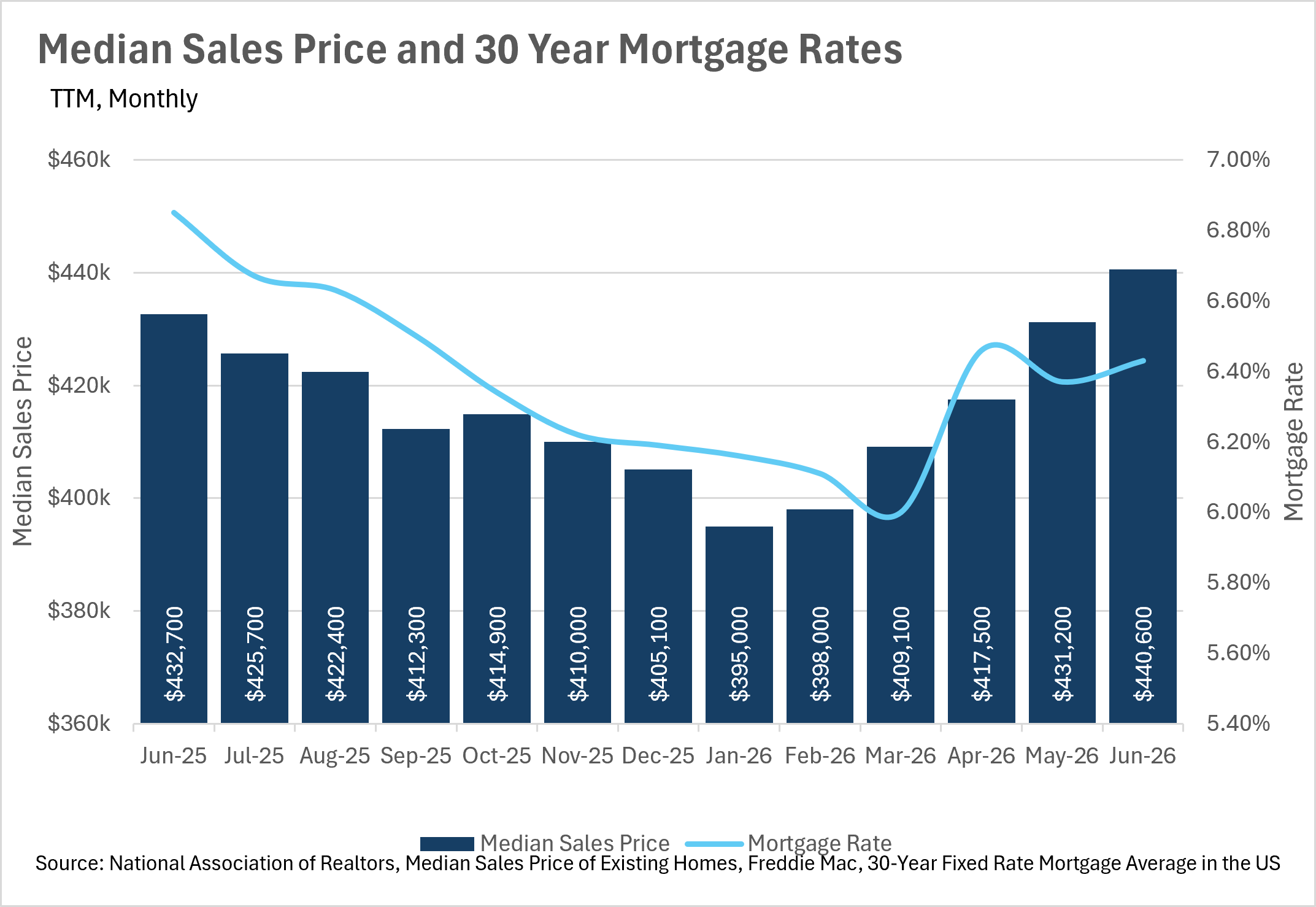
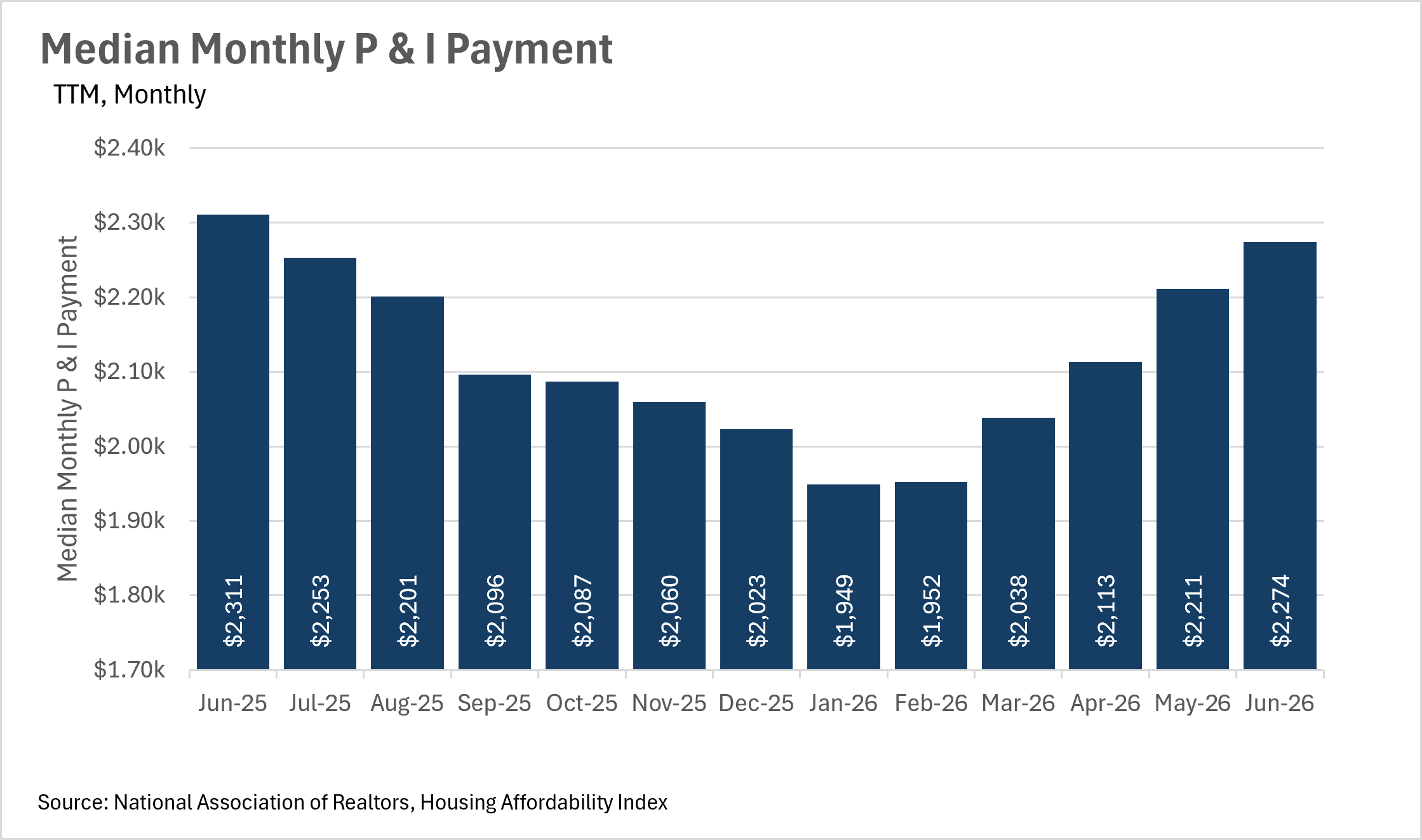
The spring rally that began back in January has officially pushed median home sale prices to their highest level in a year. In June, the median home sold for $440,600, representing a 2.18% month-over-month increase and a 1.83% year-over-year gain. This marks the fifth consecutive month of month-over-month price increases, and the median sale price has now surpassed the $432,700 peak we saw in June of last year. However, the affordability picture isn't quite as rosy as it was earlier in the year. Mortgage rates ticked up slightly to 6.43% in June, and the combination of rising prices and rates that have bounced off their March lows has pushed the median monthly P&I payment up to $2,274. While that's still 1.60% lower than the $2,311 the median homeowner was paying a year ago, the gap is shrinking fast. Back in January, the median P&I payment was $1,949, so monthly payments have risen by more than $300 in just five months. If this trend continues, the affordability gains that lower rates provided earlier in the year could be fully erased by the end of the summer.
Inventory has leveled off heading into the summer
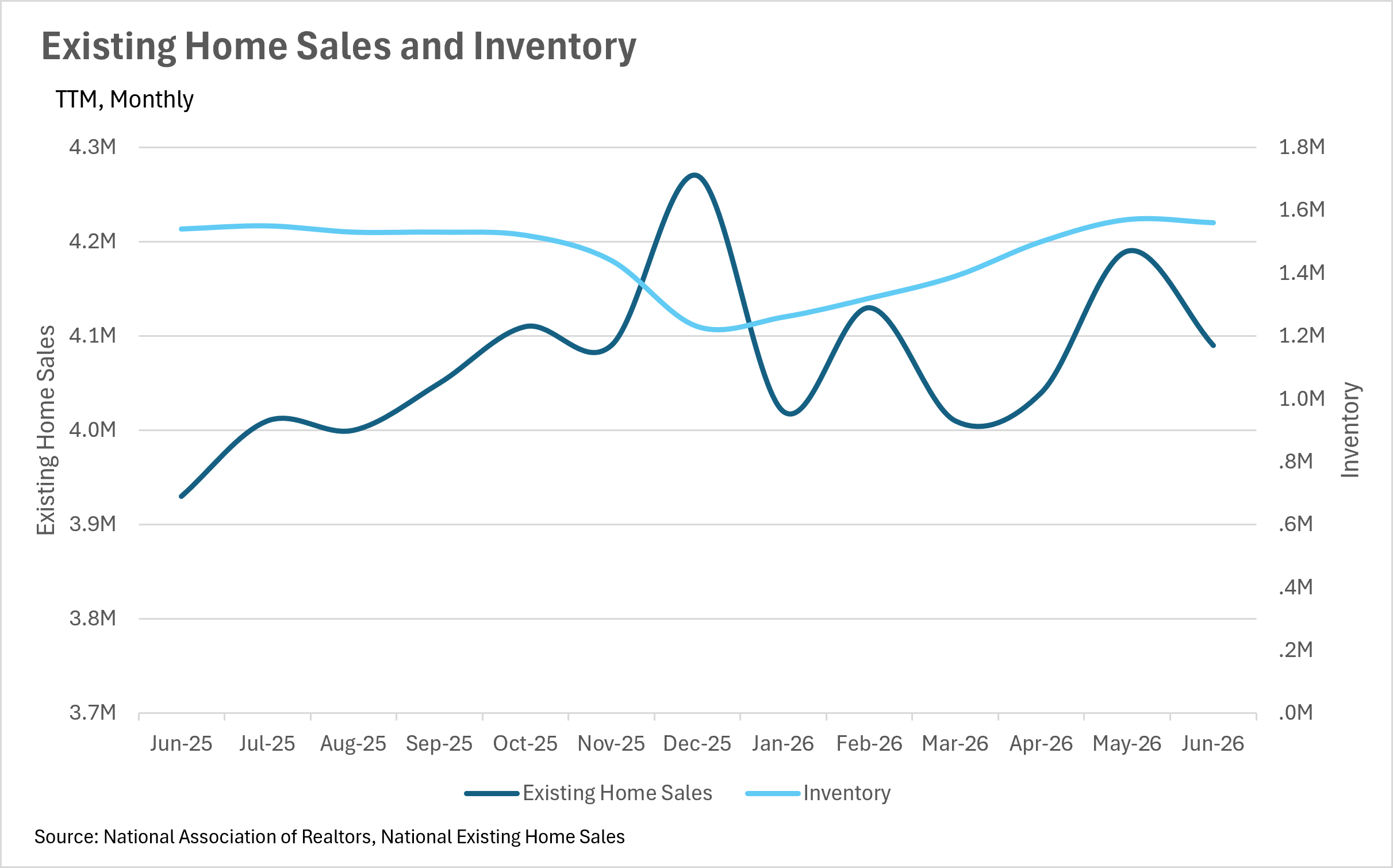
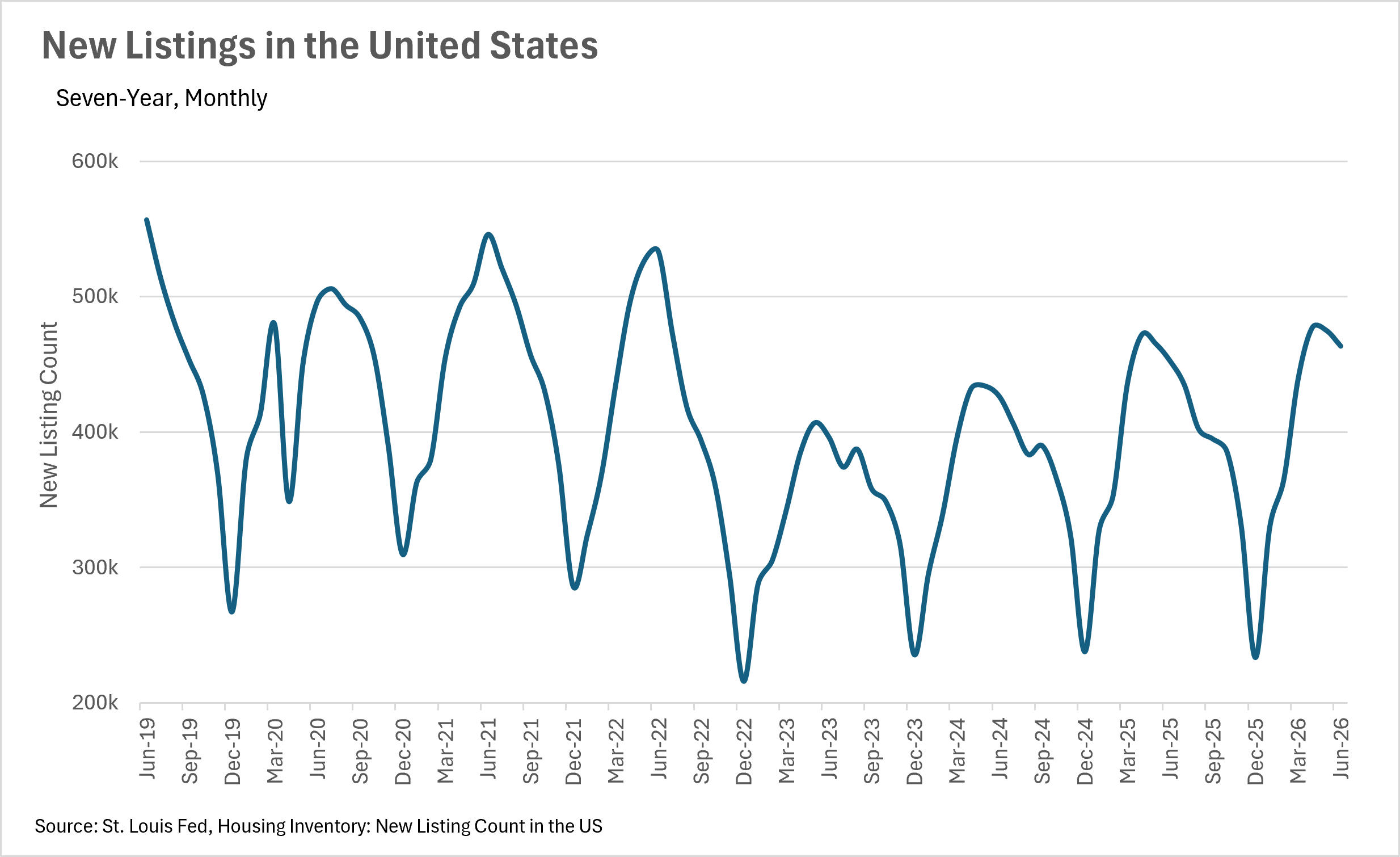
After climbing steadily from the December low of 1,230,000, inventory levels appear to have plateaued. In June, there were 1,560,000 homes available for sale, representing a slight 0.64% month-over-month decline from the 1,570,000 we saw in May, though still 1.30% higher than where we were at this time last year. On the new listings front, 463,480 new listings hit the market in June, representing a 2.45% year-over-year increase but a 2.42% month-over-month decline from May. This pullback in both inventory and new listings could signal that the spring surge of supply is beginning to taper off, which would be notable given that June and July are typically peak months for inventory. If inventory begins to decline further while demand remains strong, we could see the market tighten up heading into the back half of the summer. On the other hand, inventory levels are still roughly in line with where they were last year, so there's no reason to panic just yet.
Existing home sales are up more than 4% on a year-over-year basis
Existing home sales came in at 4,090,000 in June, representing a 4.07% year-over-year increase, the strongest year-over-year gain we've seen in quite some time. That said, sales did pull back by 2.39% from May's pace, which isn't unusual given the typical seasonality of the market. The year-over-year increase is the real headline here, as it tells us that buyers are meaningfully more active than they were at this point last year. This is likely being driven by a combination of factors: mortgage rates are still lower than they were a year ago, inventory is providing more options to choose from, and the steady march of price appreciation may be creating a sense of urgency among buyers who don't want to wait any longer. The question heading into the second half of the year is whether this momentum can be sustained. With mortgage rates hovering in the mid-6% range and monthly payments creeping higher, we could see some buyers pull back if affordability continues to erode.
Buyers are stepping up, but sellers still have the edge
When determining whether a market is a buyers' market or a sellers' market, we look to the Months of Supply Inventory (MSI) metric. The state of California has historically averaged around three months of MSI, so any area with at or around three months of MSI is considered a balanced market. Any market that has lower than three months of MSI is considered a seller's market, whereas markets with more than three months of MSI are considered buyers' markets.
Right now, the national market appears to be tilting in favor of sellers. Existing home sales are up more than 4% year-over-year, which means demand is absorbing the available supply at a healthy clip. At the same time, inventory has plateaued and even declined slightly on a month-over-month basis, which means the supply side of the equation isn't growing fast enough to offset the increase in demand. If this dynamic persists through the summer, we could see months of supply tighten further, giving sellers even more leverage. However, with monthly P&I payments rapidly approaching where they were a year ago, there's a chance that demand cools off in the coming months, which would bring the market back toward balance. As always, real estate is a highly localized asset, which is why you should check out what's going on in your local market below in the Local Lowdown!
Big Story Data